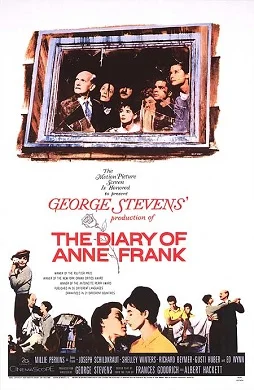
Directed by George Stevens, The Diary of Anne Frank (1959) stands as a significant cinematic portrayal of one of history's most tragic periods, the Holocaust. This adaptation of Anne Frank's poignant diary serves not only as a testament to the horrors endured during World War II but also as a powerful exploration of survival, family, and the unyielding spirit of hope. Stevens, an acclaimed director known for his humanistic approach to storytelling, infuses the film with a grandiose yet intimate atmosphere, giving voice to its young protagonist while illuminating the broader tragedy faced by millions.
Critics have often remarked on the film's soulful journey through darkness, emphasizing its ability to balance the gravity of its subjects with a respectful homage to its characters’ humanity. Through Anne's articulate thoughts, portrayed by the talented Millie Perkins, viewers are drawn into a moving narrative that encapsulates courage in the face of doom. The film's depiction of the cramped quarters of the Secret Annex reflects a cavernous emotional landscape, symbolizing the internal and external struggles faced by those seeking refuge from an unforgiving world.
The critical consensus aligns around a poignant theme of perseverance, how the fragile threads of family can provide solace amidst despair. Many reviewers have noted the film’s less sanitized approach to its themes, delivering a sharper portrayal that eschews sentimentality to spotlight the real fear experienced by its characters. The contrasts of hope and tragedy emerge vividly, as this Oscar-winning adaptation presents a compelling tribute to the indomitable human spirit even in the most harrowing circumstances.
Amid the backdrop of World War II, The Diary of Anne Frank becomes a profound commentary on the resilience of youth in the face of oppression. The film artfully captures the vibrancy of Anne's dreams and aspirations, painting her as a heroic figure who embodies a universal longing for freedom and understanding. The international recognition of the film speaks to its capacity to resonate across cultural divides, reaffirming its status as a vital piece of cinematic history that handles its critical thematic material with both sensitivity and strength.
As part of George Stevens' oeuvre, this film encapsulates his lifelong commitment to exploring complex human emotions, focusing on dignity amid adversity. The legacy of The Diary of Anne Frank endures not only as a moving representation of a family's plight during the Holocaust but also as a broader discourse on the importance of preserving memory and fostering hope against the odds. Through its artistic lens, the film challenges us to confront the darker elements of our shared history while inspiring a dialogue on compassion and humanity.