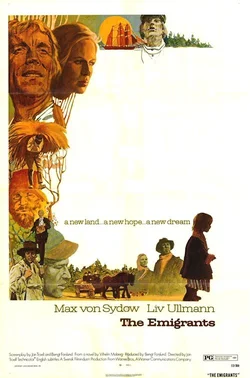
Jan Troell's The Emigrants, released in 1971, stands as a landmark in Swedish cinema and a pivotal contribution to the historical drama genre. Set against the backdrop of 19th-century Sweden, the film explores the plight of immigrants seeking a new life in America. Troell's oeuvre often intertwines personal narratives with broader historical contexts, and this film exemplifies his ability to render the struggles of ordinary people in a profound and engaging manner. With its fresh perspective on migration and frontier life, The Emigrants not only echoes the experiences of countless individuals seeking better opportunities but also delves into the complexities of identity, belonging, and the sacrifices that accompany such journeys.
Critics have universally praised the film for its powerful storytelling and authentic depiction of hardships faced by its characters. The narrative centers around a group of Swedish peasants, particularly through the lens of the female perspective. This focus on women’s experiences enhances the emotional core of the film, portraying their resilience and strength in the face of adversity. Troell's attention to detail and his commitment to honesty contribute to a gritty realism that captivates audiences and engages them in the characters' struggles. The cinematography, capturing both the beauty and harshness of the landscape, complements the themes of migration and the relentless pursuit of the American Dream.
At its heart, The Emigrants is not just a tale of individual ambition but a comment on the broader historical context of immigration and its pressing relevance today. The film addresses the intricate dynamics between the immigrants and indigenous populations, revealing both moments of connection and tension. It lays bare the often overlooked realities of frontier life, where survival hinges on collaboration, yet is marred by cultural clashes. Through this lens, Troell forces viewers to confront the mythologized narratives of the American experience, offering instead a more nuanced, gritty portrayal of real lives affected by profound change and displacement.
The emotional depth of The Emigrants is further enhanced by its strong performances, particularly those of Liv Ullmann and Max von Sydow, whose portrayals are both touching and complex. They embody the hopes and fears of their characters, making their journey resonate deeply with audiences. As the characters navigate the trials of migration, viewers are invited to witness the harrowing yet hopeful nature of their passage towards a new life. The film balances moments of despair with instances of joy and celebration, capturing the duality of the immigrant experience.
In conclusion, The Emigrants remains a significant work in both Troell’s filmography and the broader canon of historical dramas. Its honest and profound exploration of migration, identity, and the human spirit offers not only a lens into the past but also echoes contemporary conversations about immigration and cultural exchange. The film's ability to present a gritty and authentic representation of this journey ensures its place as a touching historical drama that continues to resonate with audiences across generations.