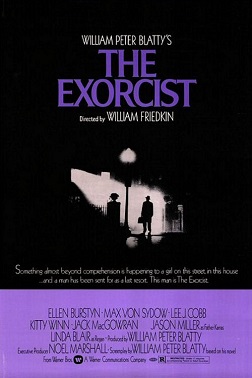
In the annals of cinema history, William Friedkin's The Exorcist holds a distinguished place as a groundbreaking work in the horror genre. Released in 1973, it not only terrified audiences but also challenged the boundaries of what horror could achieve. Its chilling narrative, centered on the possession of a young girl by a malevolent entity, raises profound questions about faith, the existence of evil, and the human condition. Friedkin's direction and the film's striking visual and auditory elements set a new standard for horror movies, blending psychological depth with visceral fear in a way that few films had done before.
Critics have lauded The Exorcist for its unsettling portrayal of demonic possession and the struggle between good and evil. The film's adept exploration of faith, not just in the religious sense but also as a broader commentary on human belief systems, served to elevate the narrative beyond mere horror. The performances, particularly by Linda Blair as the possessed Regan and the veteran actors portraying the priests, not only contribute to the film's terrifying atmosphere but also underscore its serious themes. In grappling with the nature of evil through the lens of faith, The Exorcist invites viewers to reflect on their own beliefs, making it a thought-provoking piece that resonates on multiple levels.
As the film unfolds, it delves into the darkest corners of human existence, manifesting fear in both psychological and supernatural forms. Critics have deemed it diabolically inspired, not only for its shocking imagery but for its commentary on the fragility of innocence and the oft-ignored presence of malevolence in our world. This duality, where fear is both cerebral and physically manifested, excites and disturbs in equal measure, ensuring that the experience is as much about intellectual contemplation as it is about visceral reactions. Audiences are drawn into a narrative that confronts them with the potential for evil that lies within and outside of humanity.
The film has endured as a cultural touchstone, often cited in discussions of horror, and frequently referenced in the context of faith-related narratives in film. Its influence is marked by countless imitations and homages that seek to replicate its potent blend of fear and seriousness. Yet, none have quite captured the essence that The Exorcist inadvertently created; it remains both an exemplar of the genre and a critical exploration of the human experience in the face of the incomprehensible. The careful balance of horror and philosophical depth has solidified The Exorcist as a triumph of cinematic art that continues to inspire dialogue about the darkest and most profound aspects of life, each viewing offering new layers of understanding.