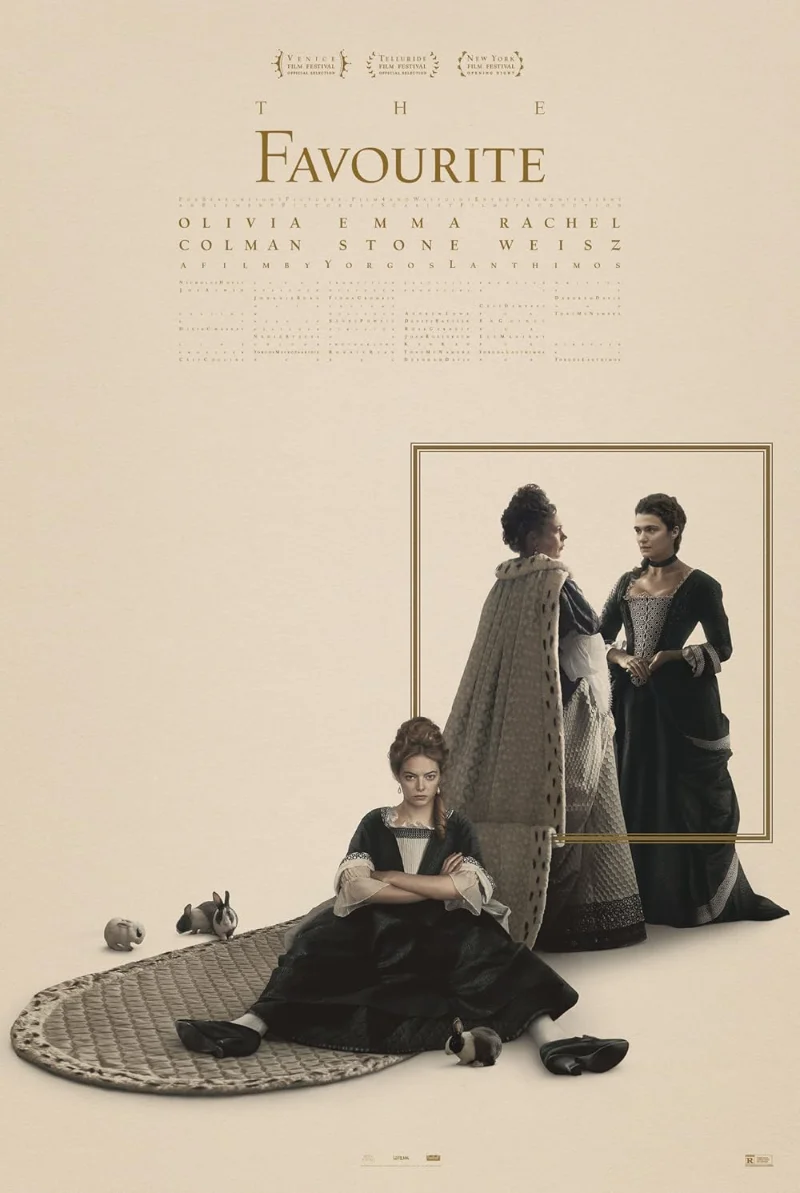
In the landscape of contemporary cinema, The Favourite emerges as a distinct and audacious entry, showcasing Yorgos Lanthimos's idiosyncratic approach to storytelling. Known for his ability to blend dark humor with existential themes, Lanthimos presents a historical drama that's both refreshingly absurdist and enchantingly complex. Set against the backdrop of Queen Anne's court in early 18th-century England, the film deftly weaves themes of female rivalry and power dynamics with a richly textured aesthetic, offering viewers a glimpse into a world where love, ambition, and betrayal intersect in deliciously dark ways.
Critical consensus acknowledges The Favourite as a brilliant exploration of court intrigue and political machinations, illustrated vividly through the character dynamics among Queen Anne, Lady Sarah, and Abigail. These three women become embroiled in a fiercely competitive dance for influence, meticulously played out in lavish settings that evoke the opulence and decadence of the era. This rivalry is not merely personal; it is steeped in the political realities of the time, where manipulation and cunning strategies are essential for survival. The film’s pitch-perfect balance of humor and tension allows it to dissect the vulnerabilities of its characters even as they claw for power.
What sets The Favourite apart is its accessible yet spiky tone, laced with moments that are both ribald and pointed. The interplay of comedy and drama creates an off-kilter atmosphere, inviting audiences into a narrative that is both florid and narratively coherent. Lanthimos’s unique stylistic choices, the unconventional camera angles, the deliberate pacing, and the incisive dialogue, all contribute to the film’s ability to challenge expectations. The result is a viewing experience that feels deceptively light on the surface but is underpinned by the heavy themes of deception and ambition.
In the context of Lanthimos's oeuvre, The Favourite represents a culmination of his fascination with the darker aspects of human nature and societal structures. It adds a new dimension to his filmography, a blend of wit and visceral emotion that resonates deeply in today’s socio-political landscape. This exploration of female power and rivalry, presented with such precision and flair, speaks to the enduring relevance of women's narratives in history, reframing them through a contemporary lens.
Ultimately, The Favourite is not just an intricately crafted historical drama but a commentary on the lengths individuals will go to in order to wield power. It forces viewers to confront the absurdities of those in charge and the human follies that underpin the grand narratives of history. In doing so, it leaves a lasting impact, transcending its historical context to offer a timeless insight into the nature of ambition, rivalry, and the often ruthless quest for authority.