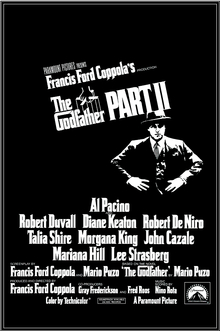
In the annals of American cinema, The Godfather Part II stands as a monumental achievement, a film that not only expanded the narrative universe established by its predecessor but also deepened the exploration of familial ties within the context of power and corruption. Directed by Francis Ford Coppola, this ambitious sequel is often hailed as one of the greatest films of all time, a sentiment supported by its multiple Academy Awards and enduring impact on filmmaking. It represents a critical point in Coppola's career, where he deftly blends the personal and the political, creating an intricate tapestry of stories that resonate with universal themes of loyalty, ambition, and the consequences of one's choices.
At its core, The Godfather Part II navigates the complexities of family dynamics as it juxtaposes the rise of young Vito Corleone in early 20th century America with the struggles of his son, Michael Corleone, in the 1950s. This dual narrative showcases not only the immigrant experience but also the corrosive effect of power on family relationships. Central to the film is the notion of family loyalty, where characters are often torn between personal desires and their responsibilities to their familial legacy. The film paints a gripping portrait of the American Dream, highlighting its dark underbelly, the longing for success and security tainted by corruption and moral decay.
Critics have lauded the film for its masterful storytelling and innovative narrative structure, which continually shifts between timelines and perspectives. This technique allows for a deep exploration of the characters' motivations and the societal pressures they face. The performance of Al Pacino, who portrays a more ruthless and distant Michael, is often noted as a transformative aspect of the film, underscoring the theme of power struggles that infiltrate both the Corleone family and the broader context of American identity during a time of significant social change. His evolution from a reluctant outsider to a formidable leader encapsulates the tragic fate of those who pursue power at the expense of their humanity.
Moreover, The Godfather Part II serves as a poignant commentary on the legacy of violence and the cyclical nature of corruption that defines not only the characters' lives but also the American experience itself. Through the lens of the Corleone family, Coppola explores the concept of "poder" (power) and "herencia" (heritage), suggesting that the pursuit of success often comes with a heavy moral cost. This expansive narrative is both a continuation of the previous film's themes and a profound statement on the complexities of American identity, reflecting the struggles that define the immigrant story.
In its breathtaking ambition, The Godfather Part II offers an epic portrayal of the consequences of power, how it corrupts, divides, and ultimately shapes one's destiny. The film invites viewers to reflect on the nature of familial love and the burdens of legacy, leaving an indelible mark on cinematic history. Its layered storytelling and deeply resonant themes continue to provoke thought and discussion, ensuring that The Godfather Part II remains a landmark in film that transcends time and genre. This masterpiece not only enriches the narrative of the Corleone family but also challenges audiences to consider the price of ambition and the depth of family loyalty.