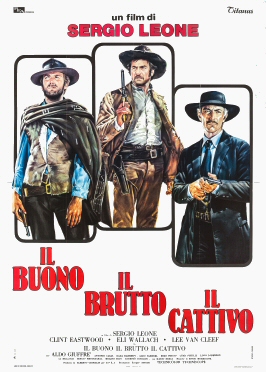
Sergio Leone's The Good, the Bad and the Ugly stands as a landmark within both the Western genre and cinema at large, illustrating the director's mastery of storytelling in a format that is inherently tied to American mythology. Released in 1966 during a period of tumult in America, the film seamlessly intertwines a tale of pursuit and betrayal with the backdrop of the American Civil War, serving not only as an entertaining spectacle but also as a critique of American hypocrisy and anti-war sentiment. It marked the culmination of Leone's famed "Dollars Trilogy,” showcasing a departure from traditional Western narratives that embraced a more moralistic approach, instead presenting a grittier, more amoral perspective.
Critically, The Good, the Bad and the Ugly is celebrated for its dazzling cinematography and Leone’s distinctive directorial style, characterized by elongated tension, close-ups that draw the viewer deep into the psyche of its characters, and the epic landscapes that frame their journeys. The film's visual artistry, enhanced by composer Ennio Morricone’s iconic score, creates a stylized environment that both amplifies and subverts expectations of the genre. Critics laud its ability to transform the Western from simple tales of good versus evil into a more complex and nuanced storyline that reflects the harsh realities of human greed and desperation.
The film's explicit anti-war themes are particularly pertinent within the context of the Civil War, where the brutality of conflict serves as a background to the characters’ greed for gold. This interplay between personal ambition and the overarching chaos of war is a motif that resonates deeply with audiences, evoking a sense of compassion amidst the grisly drama. As the three central characters, tuco, Blondie, and Angel Eyes, navigate their treacherous paths, viewers encounter a rich tapestry of behavior that reflects the era's moral ambiguities.
Leone’s decision to cast relatively unknown actors like Clint Eastwood, Eli Wallach, and Lee Van Cleef contributes to the film's fresh take on traditional archetypes, allowing for a redefinition of the Western hero. The casting choices enabled a deeper exploration of the characters’ motivations, facilitating a connection with audiences who were drawn to their flawed yet relatable nature. The film's production, realized on a low budget yet rich in ambition, highlights the remarkable resourcefulness in filmmaking that became a hallmark of Leone’s work.
Moreover, the film's length allows for an expansive narrative that delves into the complexities of its themes. The pacing, while deliberate, serves to immerse viewers in the intense psychological and moral dilemmas faced by its protagonists, positioning The Good, the Bad and the Ugly as not just a cinematic experience, but a profound commentary on humanity's darker impulses. Scholars and cinephiles alike embrace the film for its genre-defining impact, solidifying its status as both a critical and popular success that continues to influence filmmakers around the globe.
In conclusion, The Good, the Bad and the Ugly transcends its label as a mere Western, encapsulating a deeper exploration of human nature against a brutal historical backdrop. Leone’s work remains not only stylish and entertaining but also a vital commentary on war and morality, inviting audiences to question the very fabric of the narratives we perpetuate in cinema and beyond. Its poignant critique of violence and complicity resonates even decades later, heralding the film as a classic in the annals of film history.