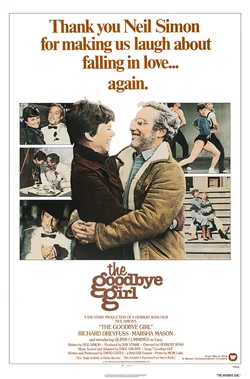
In the tapestry of 1970s cinema, The Goodbye Girl occupies a unique niche, symbolizing both a shift within the romantic comedy genre and the emergence of Neil Simon’s distinct storytelling style. Directed by Herbert Ross, this film is notable not only for its humorous and poignant narrative but also for its exploration of personal growth and unexpected relationships. As a cultural artifact, it embodies the tensions and triumphs of a decade marked by evolving social norms and cinematic experimentation. This film stands out in Ross's body of work, illustrating his commitment to blending humor with deeper emotional truths, a hallmark of his collaborations with Simon.
Critically, The Goodbye Girl has received a mixed but largely positive consensus, celebrated for its ability to weave a rich tapestry of eccentric characters and situations that echo both funny and sad moments. At the heart of the film is a love story that feels refreshingly awkward and realistic, contrasting with the overly polished romances often favored by Hollywood. The film’s lead, played with both joy and vulnerability by Marsha Mason, embodies the struggles of an independent woman grappling with new romantic prospects, leading to insightful reflections on love and trust. Richard Dreyfuss’s character, an intense and neurotic would-be actor, complements her, creating a memorable dynamic that resonates with audiences.
Thematically, the film deftly navigates the complexities of relationships, focusing on personal growth as both characters evolve throughout their cohabitation. Their initial encounters are fraught with tension, their eccentricities and insecurities often leading to comedic misunderstandings. Through a blend of sharp wit and subtle emotional beats, Simon manages to craft characters who are relatable yet delightfully odd, and this duality enhances the film’s charm. As they navigate their lives, each character learns to confront their own vulnerabilities, leading to a warm and affecting conclusion that feels simultaneously tough and optimistic.
Nostalgia plays an integral role in the film, reflecting not only the societal shifts of the 1970s but also the romantic fantasies that underpin many romantic comedies of the time. As Simon's screenplay shifts between earnestness and humor, The Goodbye Girl also stands as a reminder of genre evolution, bridging traditional narrative structures with a fresh perspective on relationships. The film's eventual adaptation into a musical further underscores its lasting impact and continued relevance, inviting new audiences to engage with its core themes of love and self-discovery.
Ultimately, The Goodbye Girl resonates with a diverse audience through its mixture of heartfelt comedy and genuine growth. Its portrayal of unexpected relationships reflects the complexities of human connection, capturing the essence of what it means to open oneself to love. In a cinematic landscape that continually seeks to redefine romantic stories, this film remains a significant touchstone, remembered for its clever writing and affecting performances. It invites viewers not only to laugh but also to reflect on their own experiences with love, turning what could have been a simple romantic comedy into a rich exploration of the human experience.