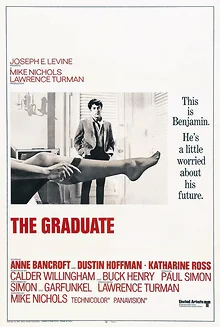
Mike Nichols' The Graduate (1967) stands as a seminal piece of cinema that reshaped the landscape of American filmmaking in the late 20th century. As one of Nichols's most iconic works, it elegantly captures the friction between the aspirations of youth and the stifling conformities of societal expectations. Set against the backdrop of a rapidly changing America, the film's exploration of generational differences, sexual dynamics, and cultural shifts resonates with a timeless quality that continues to engage audiences decades after its release. Nichols, a pioneer in capturing the awkwardness and complexities of modern relationships, uses his adept directorial style to blend comedy with drama, making The Graduate both irresistibly watchable and deeply impactful.
The critical consensus surrounding The Graduate highlights its rich thematic tapestry, which includes youth and rebellion, sexual awakening, and the nostalgia for a completely different era. The protagonist, Benjamin Braddock, played with enchanting charm by Dustin Hoffman, epitomizes the disillusionment of a generation caught in the liminal space between adolescence and adulthood. His misguided affair with Mrs. Robinson not only brims with sexuality but also serves as a critique of the era's social expectations. This relationship, laden with ethical ambiguity, underscores the film's tension between youthful desire and the weight of adult responsibilities, thus sketching a portrait of a jaded young man navigating a complex world.
Many reviewers have pointed out the film's humor, which easily melds with its more uncomfortable moments to create a uniquely fluidic viewing experience. This experimentation with tone, mixing funny and awkward situations with more serious reflections on life choices, allows The Graduate to deliver a multifaceted commentary on the nature of love, identity, and societal pressures. The careful balance of these elements renders it irresistible, ensuring its place as an archetypal coming-of-age story. Critics have lauded its ability to present a storyline that feels both specific to its time and hauntingly relevant to contemporary audiences, thus solidifying its status as a classic.
Furthermore, The Graduate stands as a cultural touchstone that has influenced filmmakers and writers for generations. The film’s unforgettable imagery and iconic moments, such as the famous poolside scene, have woven themselves into the fabric of cinematic history, exemplifying the magic of visual storytelling. The combination of a brilliant screenplay and Nichols' direction allows the viewer to reflect on the broader human experience, fostering a sense of nostalgia that transcends time. As a cultural artifact, it speaks volumes about the restless spirit of youth, the inevitable march of social change, and the emotional complexities of relationships, making it a poignant examination of life's realities.
In essence, The Graduate remains an impactful exploration of youth’s tumultuous journey, serving as a mirror to both the past and the present. Its themes are universal, its laughter bittersweet, and its insights into the human condition profoundly relevant. As our culture continues to evolve, the film's exploration of rebellion, ethical dilemmas, and the battle between desire and social norms continues to resonate, attesting to its enduring legacy. As viewers, we are reminded that the search for identity and meaning is timeless, a journey that is just as vital today as it was over fifty years ago.