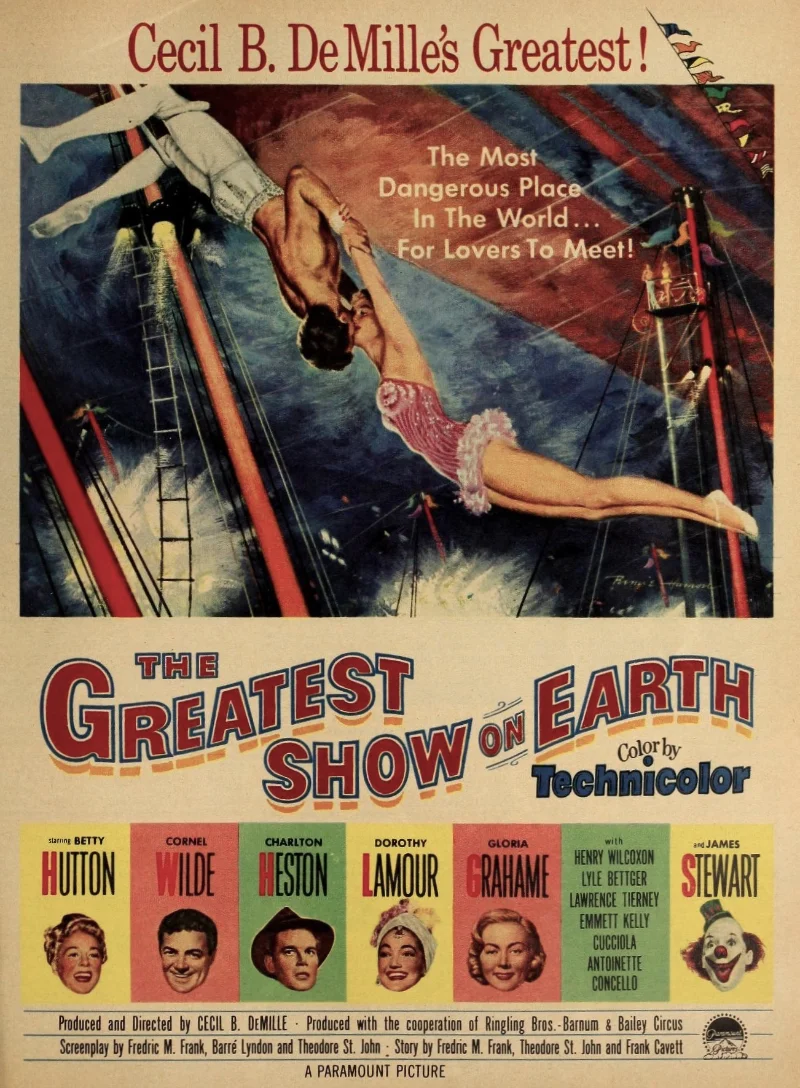
Cecil B. DeMille’s The Greatest Show on Earth marks a unique entry in the landscape of American cinema during the early 1950s, a time when extravagant spectacle reigned supreme in the film industry. As one of the renowned figures of early Hollywood, DeMille was celebrated for his larger-than-life productions, and this film exemplifies his flair for showmanship and entertainment. It stands as a testament to the grandeur and complexity of circus life, pulling audiences into a vibrant world of daring performances, emotional stakes, and romantic entanglements. Yet the film's artifice is both its allure and its Achilles heel, as it leans heavily into a bloated narrative filled with star power and dazzling acts, at times sacrificing depth for spectacle.
Critics have generally praised The Greatest Show on Earth for its rousing energy and the all-star cast that includes greats like Charlton Heston, Betty Hutton, and Jimmy Stewart. The film is an entertaining excursion into the circus, immersing the audience in its colorful, chaotic atmosphere. The spectacle of the circus acts, particularly the thrilling train wreck sequence that remains a highlight, showcases the technical prowess and commitment to visual drama that marked DeMille's work. However, the film has not escaped criticism; it is often described as hammy and overheated, veering into melodrama and clichéd portrayals of its characters. The result is an experience that feels at times like a romantic drama wrapped in layers of gloss and artifice.
Beyond its entertainment value, The Greatest Show on Earth also attempts to capture the historical essence of circus culture, its triumphs, its struggles, and the often precarious life of its performers. The representation of colorful personalities, the highs and lows of show business, and the relentless pursuit of fame create a narrative that mirrors the struggles of the artists themselves. However, the film’s heavy-handed approach to character development and its tendency to exploit the spectacle may leave some viewers yearning for a more nuanced exploration of circus life. The historical portrayal may resonate with audiences who have an affinity for the golden age of the circus, though it often feels mired in sensationalism.
In the pantheon of DeMille’s filmography, The Greatest Show on Earth stands out as a cultural artifact reflecting the zeitgeist of its time, a paradoxical blend of admiration and exploitation of the circus world. While it successfully entertains and dazzles, the criticisms surrounding its long runtime and exaggerated performances echo a broader discourse on Hollywood’s tendency to prioritize showmanship over substance. This complex relationship with entertainment spectacle points to an inherent tension in DeMille's works, offering insights into the nature of fame and the pursuit of the American Dream amidst glitz and glamor.