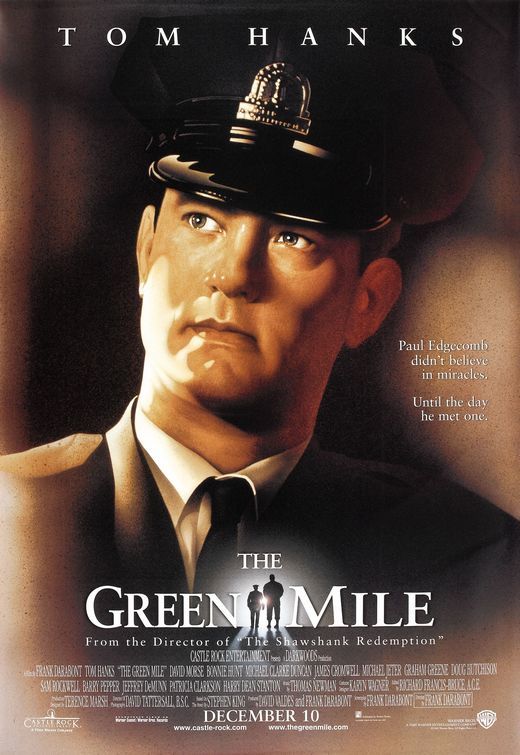
In the landscape of late 1990s cinema, The Green Mile, directed by Frank Darabont, emerges as a poignant meditation on justice, humanity, and the complexities of redemption. Adapted from Stephen King's serialized novel, the film occupies a unique space within Darabont's oeuvre, which frequently grapples with themes of moral ambiguity and human frailty. Following the success of The Shawshank Redemption, Darabont once again assembles a compelling narrative that balances emotional weight with supernatural elements. Set against the grim backdrop of a death row facility in the 1930s, the film unfolds through the eyes of Paul Edgecomb, a death penalty supervisor who witnesses extraordinary events that challenge his notions of guilt, punishment, and compassion.
Critics have generally recognized The Green Mile as a richly emotional and thought-provoking experience, even as they highlight its occasional drawbacks, such as its protracted length and moments that may feel unconvincing. At its heart, the film weaves complex narratives of justice and redemption that resonate deeply in today's sociopolitical landscape. The presence of John Coffey, a gentle giant with miraculous healing powers, serves as a powerful symbol of innocence corrupted by a flawed justice system. This character’s extraordinary gifts compel the other inmates and prison guards to confront their own morality, blurring the lines between good and evil, mercy and punishment.
Racial tensions, illuminated through Coffey's character and the broader context of the death penalty in America, add layers of complexity to the narrative. The film does not shy away from the painful realities of racial injustice, exploring how entrenched prejudices impact lives within the prison walls. It presents an opportunity for introspection and dialogue about societal issues that remain pertinent, making it more than just a tale of individual redemption but a commentary on systemic failings. The themes of humanity and compassion are exemplified through the relationships between characters, underscoring the film's emotional depth and highlighting the need for empathy even in the darkest of environments.
Despite its considerable length, which some critics argue stretches the narrative thread beyond engaging limits, The Green Mile succeeds in immersing audiences within an emotionally charged narrative filled with supernatural undertones. The film captivates with moments of tenderness, heartbreak, and a reflection on mortality that elicits a range of viewer responses. The successful blend of magical realism and gritty realism invites audiences to ponder not only the supernatural aspects of the story but also the real-world implications of its themes.
In summary, The Green Mile stands as a testament to Frank Darabont's skill in navigating the moral complexities of the human experience. Through its multilayered storytelling and a compelling performance from its ensemble cast, the film invites contemplation on the nature of justice and the possibility of redemption. Ultimately, it is a cinematic journey that provokes thought, generates emotion, and leaves a lasting impression on its viewers, affirming the enduring relevance of its core themes.