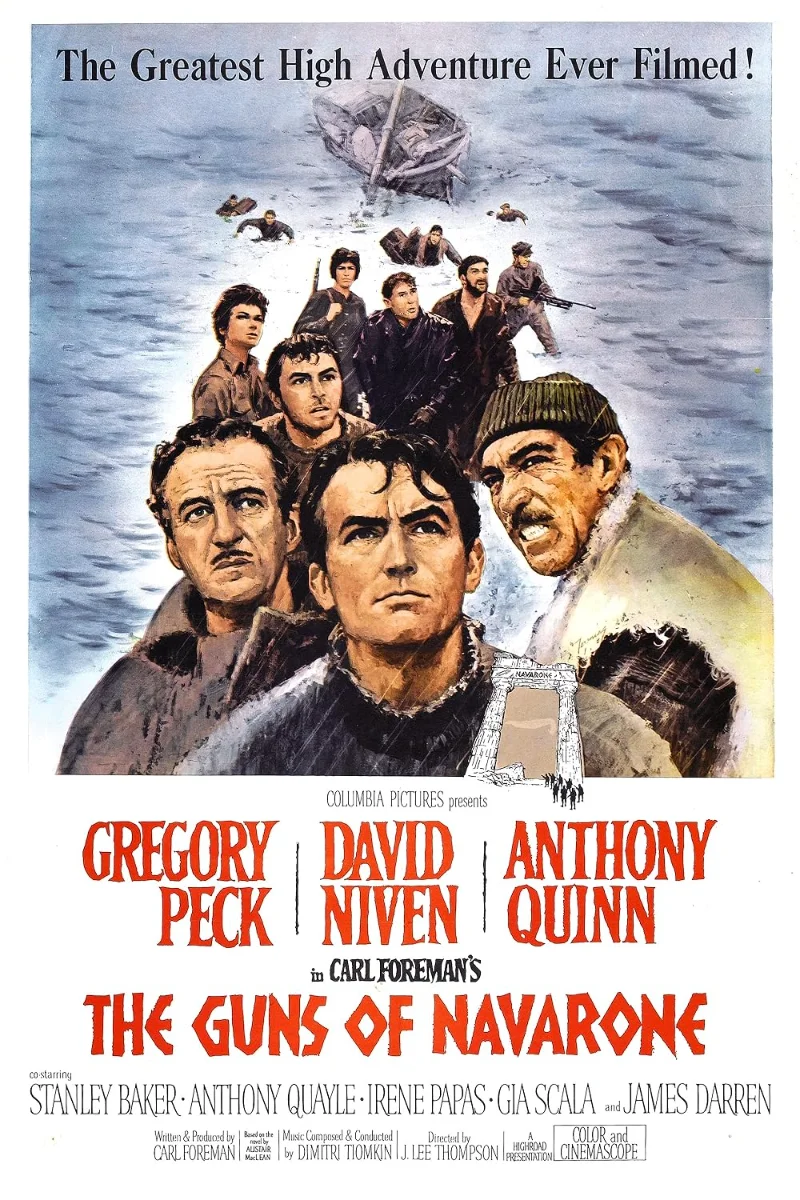
Directed by J. Lee Thompson, The Guns of Navarone stands as a quintessential example of the epic war film genre that emerged prominently in the 1960s. Situated against the backdrop of World War II, this classic not only delivers a gripping narrative but also reflects the socio-political anxieties and heroic ideals of its time. Thompson's adeptness at blending action and emotion allows for an engaging exploration of morality, duty, and the futility often inherent in war. This film encapsulates the era's fascination with men-on-a-mission stories, showcasing a diverse group of characters united by a singular purpose: to destroy a pair of formidable German guns threatening Allied naval forces.
Critically, The Guns of Navarone resonates with a sense of thrilling adventure that balances between conventional storytelling and deeper moral quandaries. The film's ensemble cast, led by Gregory Peck and Anthony Quinn, embodies the traditional heroic archetypes while navigating the complexities of sacrifice and camaraderie in wartime. The adventurous tone serves to inspire audiences, capturing the sentimentality that marked many films of its period while also presenting a more ruthless view of war's blood-and-guts reality. This duality invites viewers to reflect on the costs of heroism, establishing a narrative that is both action-packed and profoundly human.
The production of The Guns of Navarone faced numerous challenges, from location shoots on the Greek island to the demands of special effects that were groundbreaking for its time. These hurdles were ultimately overcome, resulting in a visually stunning film that not only captured the audience's imagination but also garnered critical acclaim. Its successful blend of cinematic techniques and storytelling earned it two Academy Awards and established it as a benchmark for future war films. As a testament to its enduring appeal, the film melds engaging action with profound themes of morality, reflecting the nuanced views of war that resonate even today.
Ultimately, The Guns of Navarone serves as an icon in both Thompson's oeuvre and the broader landscape of cinematic history. The film's ability to evoke feelings of courage, camaraderie, and moral ambiguity continues to engage new audiences, affirming its place as a classic. In a landscape that often thirsts for straightforward narratives, this film offers a rich tapestry of human experience, balancing traditional heroism with a sobering reflection on the harsh realities of war. Its legacy is a testament to the power of film not just to entertain, but to provoke thought and inspire conversation about the nature of conflict and the human condition.