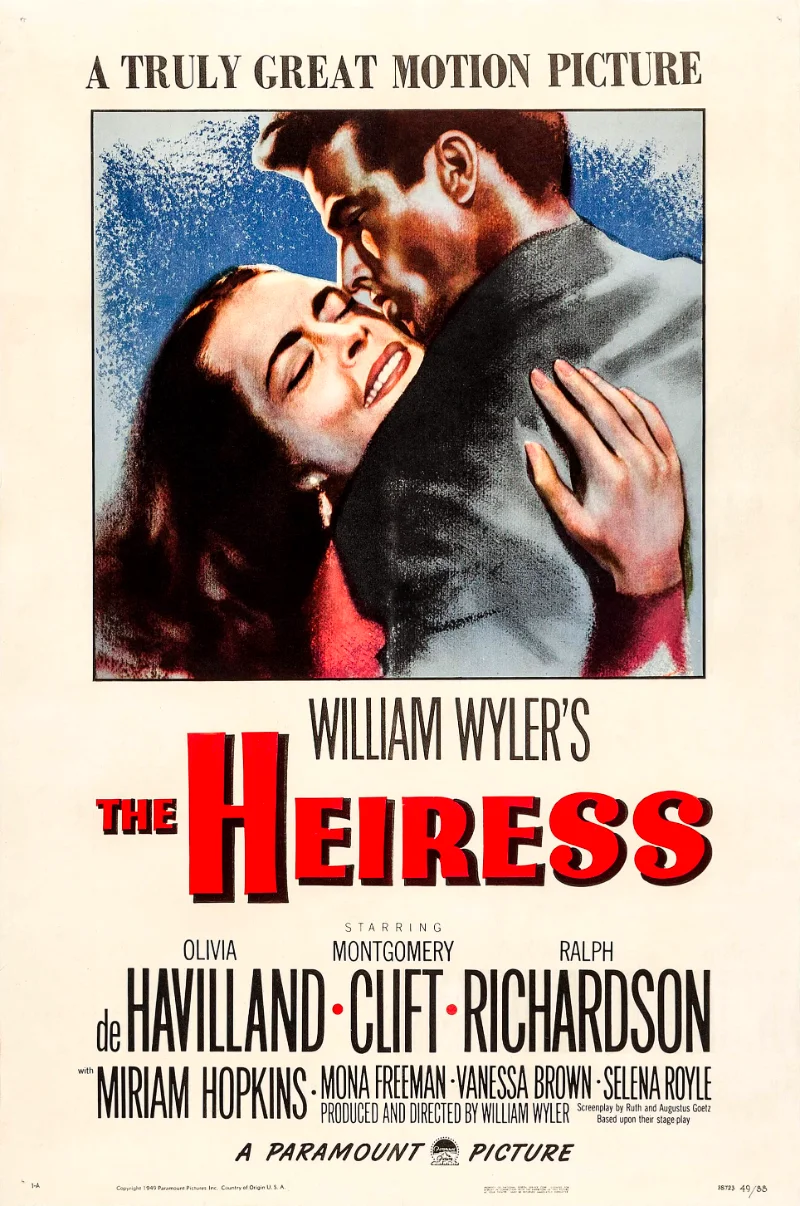
Directed by William Wyler, The Heiress emerges as a significant entry in the canon of American cinema in the late 1940s. Known for his meticulous storytelling and psychologically astute direction, Wyler harnesses the rich source material from Henry James’s novel, Washington Square, to craft a film that deftly navigates the turbulent waters of class struggle and romantic manipulation. The film depicts the life of Catherine Sloper, a wealthy but socially awkward heiress, who grapples with the pressures of wealth, societal expectations, and the complexities of love. In the post-war landscape characterized by shifting social dynamics, The Heiress offers a reflective lens on the isolation and entrapment faced by those within the upper echelons of society, all while delivering lusciously stylized imagery that heightens its themes.
Critics have lauded The Heiress as a pictorially striking and highly polished work, with its precise cinematography and thoughtful composition complementing Wyler's nuanced direction. The film's exploration of personal growth is encapsulated in Catherine's journey from the shadows of her complacent wealthy upbringing towards a profound personal awakening. The portrayal of Catherine's character, played masterfully by Olivia de Havilland, strikes a chord as she evolves from the naive girl under her father's thumb into a woman fully aware of the stakes at play in her romantic pursuits. This transformation, interwoven with themes of late-life love and secret affections, underscores the film's exploration of human vulnerability and determination.
The dynamic between class and personal aspiration is deftly highlighted throughout The Heiress. Here, we see the seductive nature of wealth and the allure of social status, paired against the stark reality of emotional manipulation and isolation. The character of Morris Townsend, played by Montgomery Clift, embodies the complexities of romantic manipulation, navigating Catherine’s affections under the guise of genuine love while harboring intentions that challenge her autonomy. This relationship serves as a vehicle for social satire, critiquing both the complacency of the affluent and the lengths one might go to secure financial stability through relationships, exposing the characters’ moral underpinnings and societal structures in the process.
In its understated yet powerful storytelling, The Heiress becomes more than a mere romantic drama; it evolves into a contemplative exploration of human nature in the face of societal constraints. The intelligent script and character development highlight Wyler’s skills as a director who is keenly aware of the human condition. As audiences witness Catherine's struggle against the currents of her social environment, they are invited to reflect on their own experiences with love, aspiration, and self-discovery. Ultimately, The Heiress stands not just as one of Wyler's excellent debuts in color filmmaking, but also as a timeless piece that resonates with viewers, speaking to the universal themes of growth, authenticity, and the resilient quest for connection amidst the complexities of life.