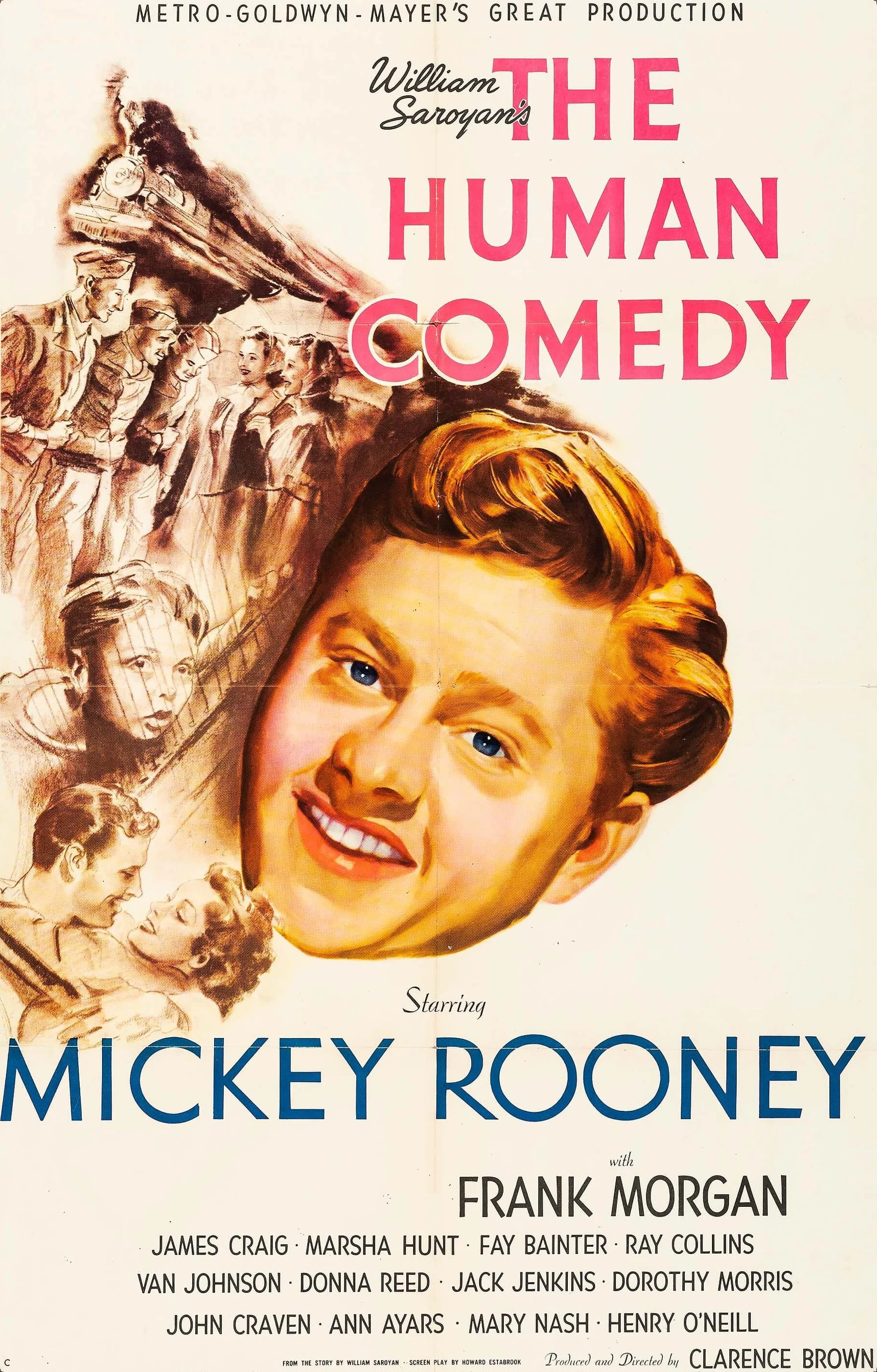
Clarence Brown's The Human Comedy (1943) occupies a unique space in the landscape of American cinema, particularly as the nation found itself enmeshed in World War II. Known for his ability to weave warmth into narratives, Brown brings the charm of small-town life to the forefront, tracing the coming-of-age journey of a young boy named Homer Macauley. Drawing upon the literary roots of William Saroyan who penned the story, this film reflects a time of innocence while grappling with the harsh realities brought forth by the war. Set in the fictional town of Ithaca, California, it serves not only as a nostalgic view of idyllic small-town life but also as a poignant commentary on the broader cultural and psychological impact of war on families and communities.
The critical consensus acknowledges The Human Comedy as a film that effectively balances humor and poignancy, generating sincere emotional resonance. Reviewers have characterized its portrayal of family bonds and the struggles of youth and adolescence as both charming and touching, capturing the essence of human experience amidst loss and adaptation. Through its well-crafted narrative, we are invited to engage deeply with the characters, particularly Homer, who embodies the conflicted emotions of youth as he navigates the trials of growing up with the specter of war looming overhead. The film cleverly juxtaposes the laughter inherent in the mundane with the undercurrents of grief and longing, making it a timeless exploration of the human condition.
Moreover, the film's comedic elements, often described as a comedy of manners, effectively reflect the social norms and values of the time. While some critiques highlight a lack of deeper layers or an uneventful structure, others celebrate its straightforward, sincere storytelling that resonates with audiences across generations. The lighthearted but deliberate approach to serious themes allows The Human Comedy to avoid becoming overly sentimental, instead providing moments of levity that serve to underline the more serious narrative arcs. In this manner, the film captures the bittersweet nature of growing up, juxtaposing youthful aspirations with the somber realities that challenge them.
Despite its charming exterior, The Human Comedy also engages with racial and social issues subtly embedded within its narrative. While the film reflects the values of its time, some critiques point to its lack of depth in addressing topics such as race, sex, and political correctness, which may appear to modern audiences as simplistic. Nevertheless, in the context of World War II, it presents a comforting humanism that seeks to unite rather than divide, a characteristic that remains immensely relevant in contemporary discussions on community and solidarity.
In conclusion, The Human Comedy stands as a remarkable example of how film can serve both as a mirror to society and a vessel for personal reflection during tumultuous times. The film's blend of humor, poignant storytelling, and authentic familial connections craft a narrative that is simultaneously heartfelt and engaging. Brown's direction, coupled with Saroyan's narrative, offers viewers a tender glimpse into the trials of youth within a backdrop marked by external conflict, illustrating that even in the darkest times, the human spirit continues to yearn for connection, understanding, and hope.