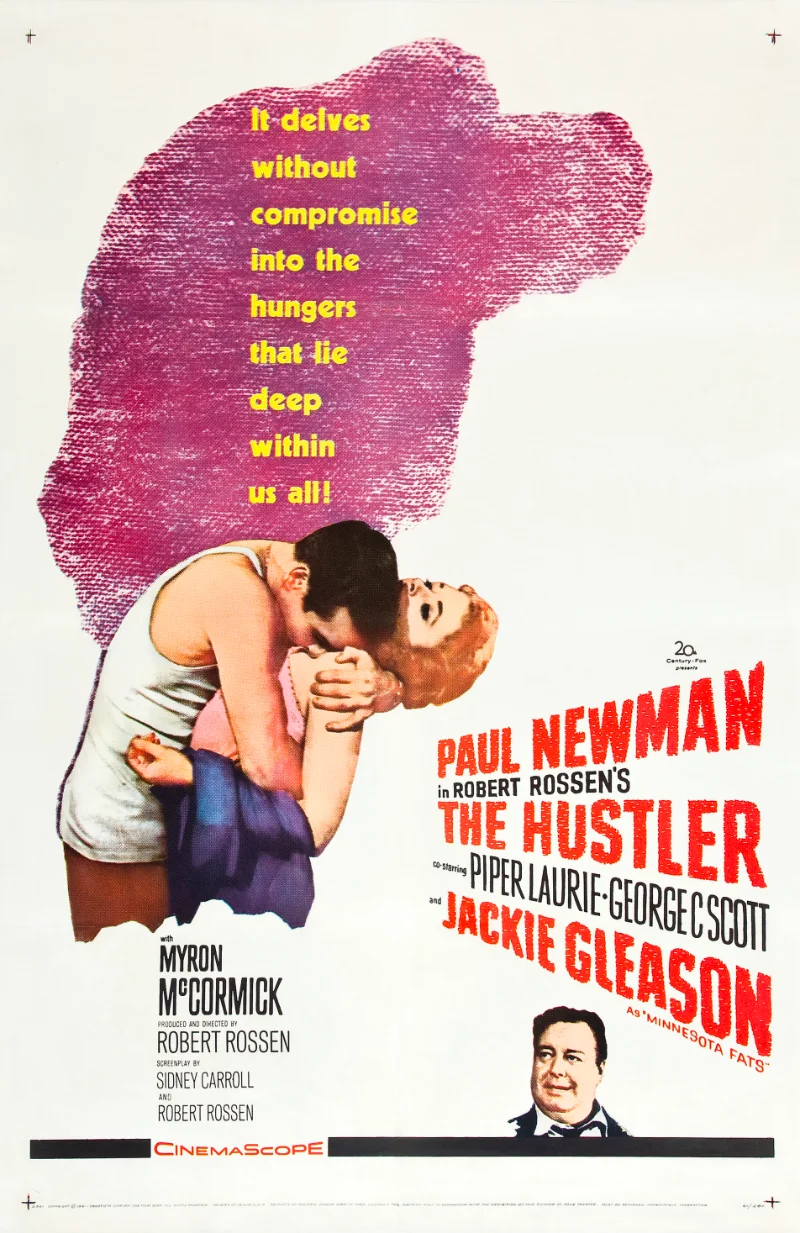
In the pantheon of American cinema, few films capture the raw, existential struggle of the human condition quite like The Hustler. Directed by Robert Rossen in 1961, this gritty and character-driven narrative offers a profound exploration of ambition, betrayal, and redemption, set against the backdrop of the high-stakes world of professional pool. Rossen, who was known for his psychological depth and stylish storytelling, adeptly crafts a tale that not only delves into the psyche of its protagonist but also reflects the societal tensions of the era, firmly establishing The Hustler as a significant touchstone in the evolution of American filmmaking.
At its core, The Hustler grapples with themes of self-destruction and loyalty, as it follows the journey of "Fast" Eddie Felson, played by Paul Newman. Eddie's obsession with becoming the best pool player drives him into a turbulent world characterized by high stakes and low morals. This relentless ambition is contrasted with his romantic entanglement with Sarah, portrayed by Piper Laurie, who embodies both love and the potential for redemption in Eddie's life. Their relationship serves as a painful reminder of the loneliness that often accompanies ambition, illustrating how personal connections can be fractured in the pursuit of success.
Critical consensus aligns on the film’s portrayal of internal struggle, where characters grapple with their sense of self-respect amid overwhelming pressures from both within and outside. Eddie’s rivalry with the formidable “Minnesota Fats,” played by Jackie Gleason, culminates in a psychological duel that examines the fine line between confidence and hubris. This hard-boiled depiction of competition is not just about skill but about the emotional toll exacted on those who dare to confront their limitations and desires, offering a stylized yet gritty reflection of human vulnerability.
Rossen masterfully employs a blend of nuanced character development and existential themes, inviting viewers to contemplate the darker aspects of ambition, such as betrayal and the potential for self-sabotage. As Eddie navigates the moral complexities of his world, the film questions whether the pursuit of greatness is worth the cost, creating a narrative rich with tension and depth. The stark cinematography and sharp dialogue further enhance the psychological dimensions of the story, grounding its more stylized elements in a context that feels both authentic and resonant.
Ultimately, The Hustler transcends its immediate narrative, inviting viewers to reflect on broader themes of ambition and redemption. The film captures the duality of aspiration, illustrating how the quest for success can often lead to profound loneliness and existential crises. Rossen’s work remains a compelling examination of character and morality, solidifying The Hustler as a classic that resonates with audiences keen to explore the complexities of the human spirit.