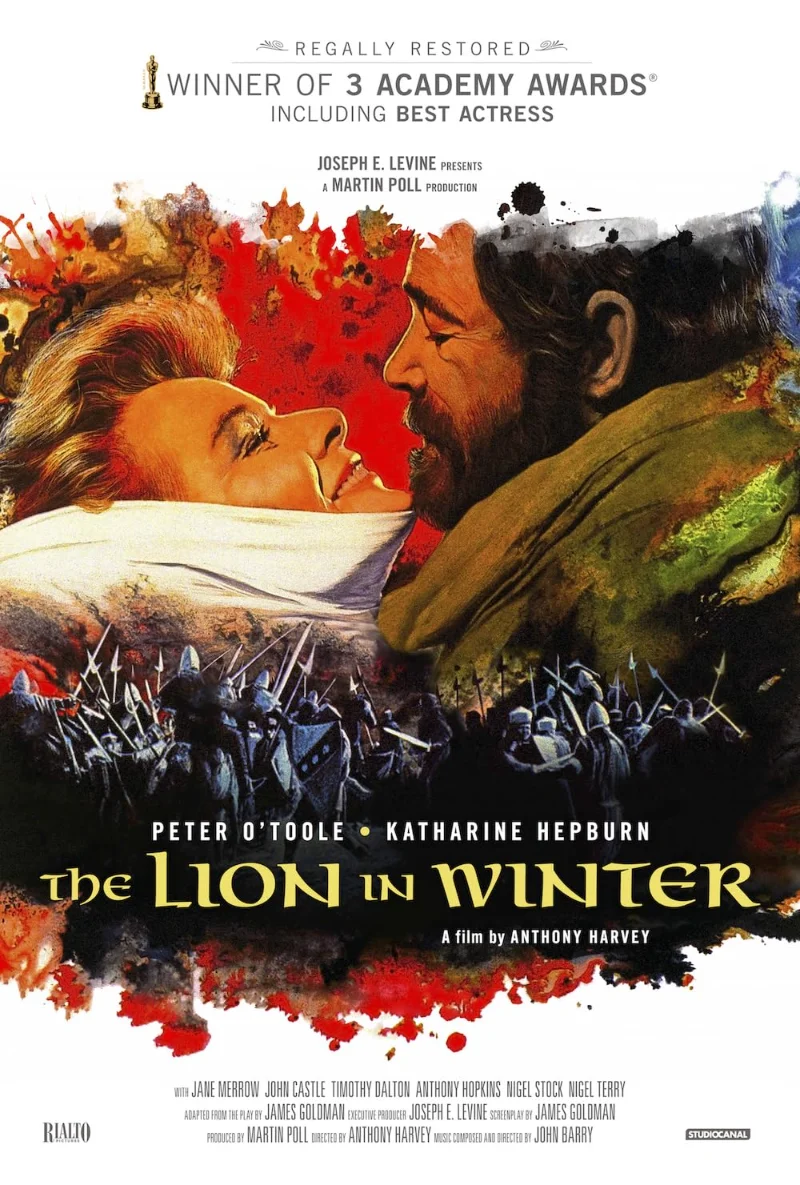
The Lion in Winter, directed by Anthony Harvey in 1968, occupies a significant place in cinema history, particularly within the realm of historical dramas. Harvey, known for his adept handling of complex narratives and character dynamics, delivers a film that deftly combines political intrigue and familial conflict. This literate epic presents a dramatized portrayal of King Henry II of England and his family, set against the backdrop of medieval history. With a script that excels in its clever dialogue and strong thematic undercurrents, The Lion in Winter stands as a testament to the power of character-driven storytelling.
At the core of The Lion in Winter lies a vivid exploration of family dynamics riddled with rivalry, as the film captures the scheming and maneuvering among Henry II's children, particularly Richard, John, and Eleanor's complex relationship with their father. The inheritance of the crown becomes a battleground, where personal betrayals intersect with grand political ambitions. Critics have lauded how the film not only dives into the historical context of succession and dynastic struggle but also showcases the deeply human elements of these relationships. The marriage of spirited dialogue and intelligent direction creates a captivating rendering of a family in turmoil, entangled in the web of medieval politics.
The performances delivered by the film’s ensemble cast further elevate this historical melodrama. With standout performances by Katharine Hepburn as Eleanor of Aquitaine, Peter O'Toole as Henry II, and their on-screen offspring, the film is undeniably an actor's showcase. Hepburn’s portrayal, which earned her an Academy Award for Best Actress, is steeped in both vulnerability and ironclad resolve, while O’Toole embodies a king wrestling with the limits of power and affection. The result is a production marked by big performances, showcasing an extraordinary talent pool committed to their characters.
Production design plays an equally pivotal role in reinforcing the film's themes, creating an immersive medieval landscape that enhances the narrative's inherent drama. Critics have celebrated the visual pageantry and meticulous attention to detail, which serve not only to transport audiences to the past but to complement the film's intellectual rigor. Its florid language and grandiose settings contribute to the overall impact, allowing The Lion in Winter to resonate with contemporary viewers despite its historical context.
Retrospectively, The Lion in Winter offers a unique blend of entertainment and depth, showcasing how personal ambitions and familial ties can dramatically intersect. The film’s intelligent handling of its themes, alongside the anachronistic yet witty dialogue, invites viewers to reflect on the timelessness of its conflicts. As a result, it endures in film history, revived and revered for its insightful portrayal of power struggles and the fragile nature of familial love. In the context of Harvey’s body of work, this film exemplifies his ability to blend vibrant character portraits with historical narratives, reinforcing the significance of legacy in both political and personal realms.