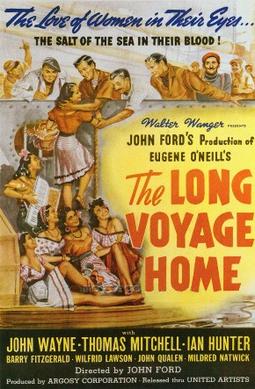
The Long Voyage Home, directed by John Ford in 1940, stands as a poignant exploration of the themes that defined the American cinematographic landscape in the early 20th century. Adapted from Eugene O'Neill's plays, this film marks a significant entry in Ford's oeuvre and showcases his profound ability to translate complex narratives into cinematic language. The film’s focus on the thresholds between land and sea reflects a broader metaphor for the transitions between stability and chaos, home and the unknown, key aspects of the male experience that Ford frequently engaged with in his work.
The critical consensus surrounding The Long Voyage Home emphasizes its haunting and poetic qualities, showcasing Ford's mastery in eliciting a palpable sense of melancholy through visual storytelling. The film captures the camaraderie among sailors navigating the treacherous waters of both the sea and their own internal struggles. This solidarity is elegantly interwoven into the broader themes of masculinity and professionalism within dangerous circumstances, painting a vivid picture that resonates with audiences seeking more than just surface-level entertainment.
In this adaptation of O'Neill’s plays, Ford succeeds in bringing the playwright's existential musings to life through a robust narrative that eloquently captures the harsh realities of life at sea. The film invites viewers to reflect on the loneliness and bravery inherent in the lives of its characters, who embody the resilience required to endure their harsh environments. The overlapping of their personal odysseys with the literal voyage underscores the film's emphasis on adaptation, illustrating how these men must evolve not only in their roles as sailors but also as individuals facing profound emotional dilemmas.
Moreover, The Long Voyage Home contributes to the dialogue surrounding the American film identity, situating ordinary men in extraordinary circumstances and celebrating their shared struggles. Through this shared experience, Ford crafts a robust narrative that extends beyond the individual, merging personal and collective narratives in a way that feels both intimate and universal. The film's melancholic tone, punctuated by moments of robust camaraderie, resonates deeply with contemporary audiences, reflecting a timeless exploration of the human condition.