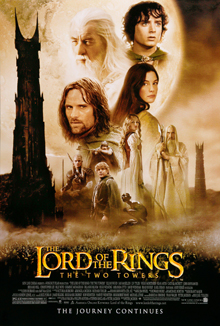
Peter Jackson’s The Lord of the Rings: The Two Towers emerges as a pivotal installment not only within the epic trilogy but also in the landscape of early 21st century cinema. Released in 2002, it follows the groundbreaking success of The Lord of the Rings: The Fellowship of the Ring, showcasing Jackson’s adeptness at translating J.R.R. Tolkien's rich mythology into cinematic language. This second chapter deepens the narrative while elevating the stakes of its heroes' journeys, establishing itself as an archetype of the action-adventure genre. With its intricate world-building and visceral storytelling, Jackson reaffirms his status as a visionary director capable of crafting films that resonate on both emotional and intellectual levels.
Critics agree that The Two Towers excels in its exploration of profound themes such as friendship, sacrifice, and the age-old battle of good against evil. The film's central characters, Frodo, Sam, Aragorn, and their companions, face immense challenges that test their loyalty and courage. As the shadow of Sauron stretches across Middle-earth, the film poignantly illustrates how power can corrupt, with characters grappling with their identities amid the growing darkness. The tension between hope and despair is palpable, and Jackson masterfully contrasts moments of exhilarating action with quieter scenes of emotional introspection, enriching the narrative tapestry.
The film is undeniably darker and scarier than its predecessor, pushing the envelope of what a family fantasy film can achieve. Reviewers note that the depiction of war and the disintegration of alliances serve as a harrowing reminder of the cost of conflict. The haunting score by Howard Shore complements the visual grandeur, crafting a stirring atmosphere that underscores the stakes of the heroes’ quests. Such a blend of the spectacular and the sinister positions The Two Towers not only as an essential installment within its own series but also as a harbinger of the epic adventure films that would follow in its wake.
Moreover, the film’s sense of organization is impressive, weaving together multiple storylines that frequently converge into a climactic confrontation. The introduction of characters such as Gollum, who embodies the inner conflict between light and darkness, adds an additional layer of complexity, reinforcing the idea that identity is often fraught with struggle. The relationships between characters are meticulously developed, showcasing the theme of friendship as a beacon of hope amid the surrounding chaos. These elements contribute to a narrative depth that elevates The Two Towers beyond mere spectacle; it becomes a profound meditation on destiny, fear, and the essence of what it means to be heroic.
In the grand scope of Jackson's work, The Two Towers stands as a testament to his audacious vision and his commitment to faithfully adapting Tolkien's work. The film is both a continuation of an epic tale and a poignant chapter that deepens our understanding of its characters, setting the stage for the trilogy's concluding saga. Ultimately, while The Two Towers is filled with thrilling action sequences and impressive visuals, its heart lies in the emotional journeys of its heroes, a quality that resonates with audiences long after the credits roll.