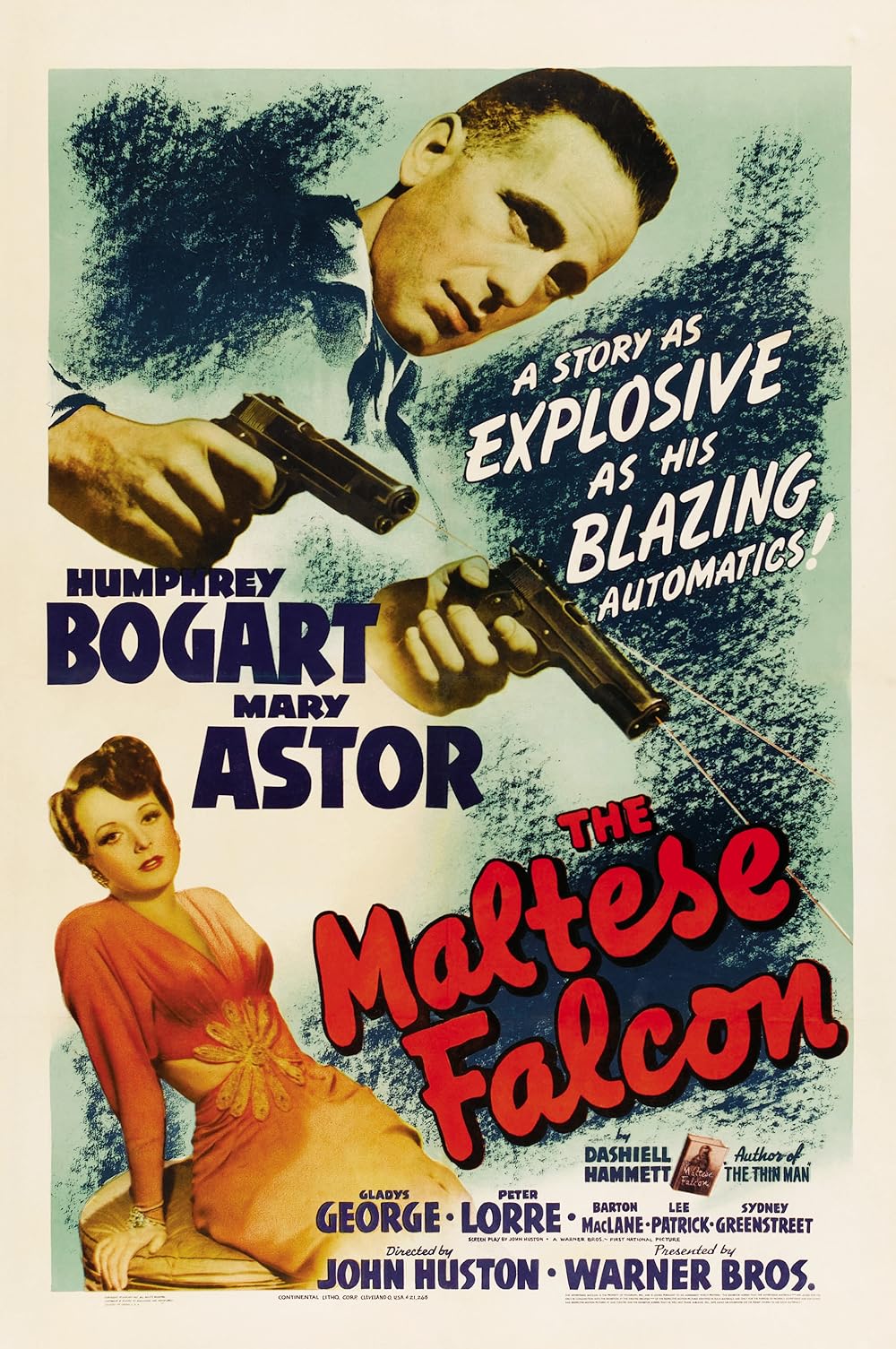
As one of the defining works in film noir, The Maltese Falcon holds a significant place in both the history of cinema and the evolution of the detective genre. Directed by John Huston in 1941, this adaptation of Dashiell Hammett's 1930 novel transcends its source material, offering a stylish and intricate narrative that laid the groundwork for future noir films. Huston, who made his directorial debut with this film, skillfully navigates the gritty underbelly of crime, encapsulating the essence of hard-boiled fiction through a lens that is both tough and cynical.
The film follows private investigator Sam Spade, played by Humphrey Bogart, as he becomes entangled in a web of deceit, betrayal, and moral ambiguity. Critics have consistently noted the film's ability to blend entertainment with a dark atmosphere, bringing to life a world where characters are driven by greed and self-interest. Spade’s steely demeanor and the film's clean, spare cinematography reflect the post-war cynicism of the early 1940s, while also establishing Spade as a quintessential hard-boiled detective, embodying the archetype that would influence countless portrayals in Hollywood.
One of the most remarkable aspects of The Maltese Falcon is its exploration of moral ambiguity. Unlike traditional narratives where good triumphs over evil, this film presents a more complex reality where the lines are blurred. Characters are not simply heroes or villains; they are flawed and driven by ambiguous motives. The film’s intricate plotting and dreamlike quality keep audiences guessing, embodying the randomness of fate and chance in a corrupt world. The interplay between trust and betrayal showcases Huston’s masterful storytelling, setting the tone for the film noir genre that would flourish in the following decades.
The stylistic elements of The Maltese Falcon further enhance its significance. The film’s sharp dialogue, atmospheric lighting, and meticulously composed scenes create an immersive experience. The dialogues crackle with wit and tension, drawing viewers into a world where every interaction is laced with subtext. Cinematographer Arthur Edeson contributes to the film's sleek visual style, creating shadows and angles that mirror the moral complexities of the narrative.
Critically, The Maltese Falcon is celebrated for its influence on both the detective genre and film noir. It set a precedent for the tough characteristics of protagonists, reflecting a societal disenchantment that resonated with audiences of the time. The film's legacy is profound; it showcases the evolution of storytelling techniques in cinema, highlighting how adaptations can both honor and reinterpret their sources. Ultimately, The Maltese Falcon remains a pillar of American cinema, a compelling exploration of the darker facets of human nature and the ever-looming specter of the unknown.