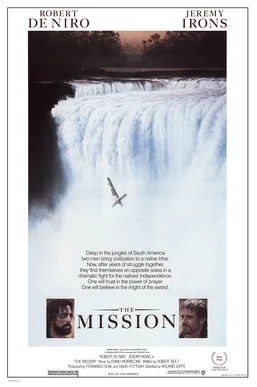
Roland Joffé's The Mission, released in 1986, stands as a significant entry in the annals of cinema, particularly for its bold engagement with the complex themes of grace, faith, and the moral contradictions inherent in colonialism. Set against the backdrop of 18th-century South America, the film brings to life the harrowing realities faced by indigenous communities due to European imperialistic ambitions. Joffé's directorial choices, underpinned by a stirring musical score from Ennio Morricone, create what many critics describe as a haunting spectacle, prompting audiences to reflect on the ethical dilemmas of progress and civilization. Within Joffé's oeuvre, this film showcases his penchant for exploring weighty societal issues through an emotionally resonant lens, marking a departure from more commercial narratives prevalent at the time.
Critically, The Mission has garnered both praise and scrutiny, with reviewers noting its somber yet passionate exploration of loyalty and redemption amidst turmoil. The film's narrative revolves around the Jesuit priest Father Gabriel, portrayed by Jeremy Irons, and the mercenary Rodrigo Mendoza, played by Robert De Niro, as they grapple with their roles in a world teetering on the edge of moral collapse. Their journey reflects an investigative framework that interrogates the destruction of native cultures at the hands of self-mythologized civilization. As they navigate their faith in the face of violent colonial strategies, the film poignantly highlights the irony of their situations, their mission to save souls inadvertently complicates their moral standing.
The critical consensus surrounding The Mission acknowledges its ambitious scope and the sobering realities it uncovers regarding the historical accuracy of colonial narratives. Many reviewers find the film's portrayal of violence and nonviolence as a means of resistance to be both intelligent and tragic, illustrating how the struggle for redemption can often intertwine with the brutal legacy of imperialism. Critics highlight the film's audacious depiction of faith's contradictions, prompting nuanced discussions about the notions of loyalty against a backdrop of unyielding oppression. The surreal juxtaposition of breathtaking landscapes with harrowing struggles serves as a powerful commentary on the broader implications of progress that often smothers the innocent.
Furthermore, the emotional weight of The Mission resonates with audiences, not only as a narrative reflecting historical realities but also as a timeless inquiry into the human condition. The film exemplifies Joffé’s capability to tackle familiar themes such as the moral complexities of faith and the dubious nature of progress, while simultaneously crafting a compelling visual language that captivates viewers. Through its tragic portrayal of idealism obliterated by the harshness of reality, the film compels audiences to confront the responsibilities inherent in civilization's relentless advance.
As The Mission continues to engage with audiences decades after its release, it stands not only as a critical cinematic achievement but also as a reminder of the burdens of history and the fragility of cultural identities. The film serves as a catalyst for reflection on the destructive impacts of colonialism and the haunting echoes of faith and redemption that continue to shape contemporary discourses on justice and morality. Joffé’s work remains a sobering, yet necessary exploration of how the past informs our present and the importance of acknowledging those often lost in the narrative of progress.