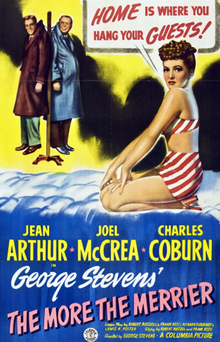
The More the Merrier, directed by George Stevens in 1943, stands as a vibrant example of classic romantic comedy during a challenging era characterized by the Second World War. Set against the backdrop of a severe wartime housing shortage in Washington D.C., the film cleverly intertwines the chaos of living conditions with the chaotic nature of love. Stevens, known for his ability to balance humor with poignancy in films like Swing Time and A Place in the Sun, deftly explores themes of connection and serendipity. In this film, his signature style emerges through the smooth interplay among characters, highlighting both their romantic pursuits and the absurdity of their living arrangements, while revealing deeper human truths amid the farcical laughter.
Critics agree that The More the Merrier masterfully cobbles together elements of screwball and romantic comedy. The film features a love triangle that is both complicated and charming, where misunderstandings abound, yet the laughter remains lighthearted and affectionate. Jean Arthur, in a standout performance, beautifully embodies the essence of versatile comedic acting, bringing a natural warmth and charm to her character. Her interactions with the equally captivating heroes, played by Joel McCrea and Charles Coburn, create a captivating dynamic that resonates through the film’s remain themes of love and longing amidst adversity. As the characters navigate their crowded accommodations, the comedic tension builds, allowing for both laugh-out-loud moments and poignant reflections.
The critical consensus celebrates the film’s timeless appeal, where its madcap antics and carefree spirit remain irresistibly funny, even decades after its release. Scholars note how the screenplay strikes a perfect balance between witty dialogue and physical comedy, traits that contribute to its classification as a romantic farce. Stevens’ adept direction allows for a seamless blend of visual humor and the barbed wit of the dialogue, creating an atmosphere that captivates audiences and evokes laughter without losing sight of the emotional stakes involved.
Furthermore, The More the Merrier reflects the evolving nature of romantic comedy during a crucial period in film history, characterized by both escapism and social commentary. As the war set the stage for shifting societal norms and the exploration of gender roles, Stevens' film emerges not only as an entertaining piece but also as a sociocultural artifact that highlights the necessity of human connection. The characters indulge in heartwarming romance within a chaotic context, underscoring the film's argument for love's resilience.
Above all, the legacy of The More the Merrier solidifies George Stevens' reputation as a master of the romantic comedy genre. The film’s charm remains undeniable, from Arthur’s expressive delivery to Stevens' brilliant direction. In a landscape filled with classic films that explore love's intricacies, the film stands as a testament to both Stevens' talent and the genre's enduring qualities. Engaging performances coupled with clever writing render this film not just a momentary escape but an enduring classic that continues to resonate with new generations of viewers.