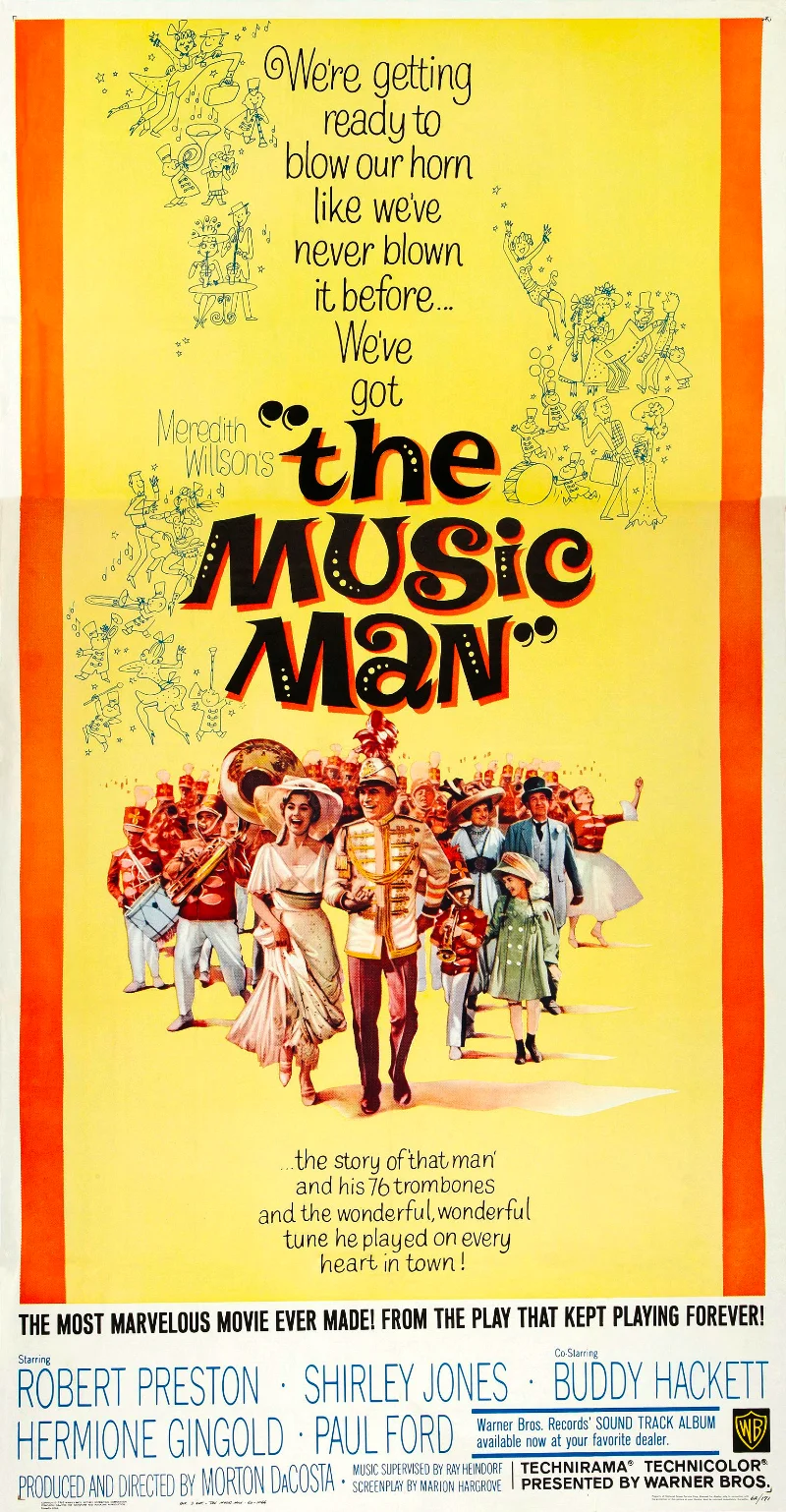
In the landscape of American cinema, The Music Man stands as a vibrant and distinctive adaptation of the 1957 Broadway hit, crafted under the direction of Morton DaCosta. This 1962 film, featuring the engaging performances of Robert Preston and Shirley Jones, successfully transitions its stage roots into a compelling cinematic experience. DaCosta, known for his expertise in bringing theatrical productions to the screen, utilizes lush musical numbers and a strong sense of place to encapsulate small-town America. The film captures an unmistakable charm and nostalgia, setting a benchmark for musical adaptations at a time when the genre was evolving rapidly.
The critical consensus surrounding The Music Man largely praises its engaging musical staging and sparkling choreography, elements that highlight the ingenuity of its presentation. Audiences are drawn into the charming world of River City, with its vivid characters and memorable tunes like "76 Trombones" and "Till There Was You." The film's folksy appeal is accentuated by its setting, providing a picturesque backdrop that enhances the story's themes of community and romance. This successful melding of theatrical exuberance and cinematic innovation positions The Music Man as a pioneering work within the musical theater genre, deserving of its enduring legacy.
Character portrayal remains a focal point in the film, showcasing Preston's boyish confidence as Harold Hill, a charismatic conman turned unlikely hero. Critics note how Preston's performance strikes a balance between zany and intelligent, making the character relatable and intriguing. Similarly, Jones embodies her role with warmth and charm, representing the strong yet cautious citizens of River City. Together, these performances evoke a sense of familiarity and comfort, drawing viewers into their journey while highlighting the dynamics of trust and deception.
Moreover, the production quality complements the musical appeal beautifully, with vibrant costumes and impressive set designs that reflect the era's aesthetics. The creative decisions made in adapting the Broadway show for film are carefully considered, with an emphasis on maintaining the show's energy while refining elements for cinematic storytelling. This approach allows for a more intimate connection with the audience, inviting them to engage with the narrative on a deeper level and appreciate the artistry involved in its creation.
Ultimately, The Music Man serves not just as a musical but as a cultural artifact that encapsulates a specific moment in American history. Its expert blend of nostalgia and innovation speaks to a yearning for simpler times, while simultaneously offering a critique of human nature and societal expectations. This enduring classic continues to resonate, embodying the joyful spirit and artistic brilliance that defines great musical theater, and ensuring its place in the annals of cinematic history.