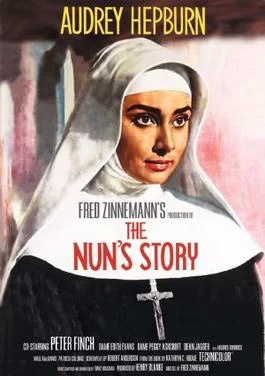
Fred Zinnemann's The Nun's Story emerges from a pivotal moment in cinema history during the late 1950s, a time when Hollywood began grappling with more complex narratives that examined faith, personal struggle, and institutional authority. This film, featuring a standout performance by Audrey Hepburn, offers an absorbing exploration of a young woman's tumultuous journey through religious life, showcasing Zinnemann's adeptness at blending melodrama with profound moral questions. In direct contrast to the vibrant optimism of the post-war era, The Nun's Story delves into the darker recesses of spiritual commitment, providing a deeply human look at the price of devotion and sacrifice.
Critics have commonly praised The Nun's Story for its intricate portrayal of individualism clashing with rigid religious structures. Hepburn's character, Sister Luke, embodies the tension between personal freedom and the demands of the Catholic Church, ultimately raising profound questions about the nature of faith and self-identity. The film’s focus on community service, education, and missionary work creates a poignant backdrop to Sister Luke's internal conflicts, highlighting her struggles against both institutional expectations and her own desires. Such themes resonate in the context of the era’s rapidly changing societal norms, making the narrative feel both relevant and controversial.
The film's dramatic arch, steeped in grief and defiance, is palpable throughout its runtime. However, it is also marked by a strange sort of eroticism, emerging not from traditional romantic entanglements, but rather through Sister Luke’s intimate connection with her faith and the weight of her vows. This intersection of spiritual longing and personal conflict injects a level of complexity and nuance that elevates The Nun's Story beyond a mere religious drama. The tattoo removal scene serves as a metaphor for Sister Luke's attempt to shed her former life, further emphasizing her quest for identity within the confines imposed by her religious vocation.
Critics, while divided, tend to agree on the film's significance and emotional depth, describing it as simultaneously solid and melodramatic. Zinnemann’s direction emphasizes the profound consequences of Sister Luke's choices, framing her experiences within the constraints of a ‘prison’ created by her vows. The film’s controversial nature reflects broader societal anxieties about the role of women and the oppressive aspects of religious institutions. The reviews suggest a retrograde approach to some themes, yet acknowledge its ability to provoke thought and discussion, solidifying The Nun's Story as a compelling commentary on the struggle for autonomy amid institutional forces.
In sum, The Nun's Story stands as a testament to the complexity of faith and the human spirit. Zinnemann, known for his ability to tackle sensitive subjects with grace, provides an engaging narrative that echoes through time, raising questions that remain relevant today. As both a reflection of personal conflict and an examination of institutional authority, the film invites viewers to ponder the true meaning of sacrifice, offering a rich tapestry of emotional and philosophical exploration that resonates deeply in an era of questioning and change.