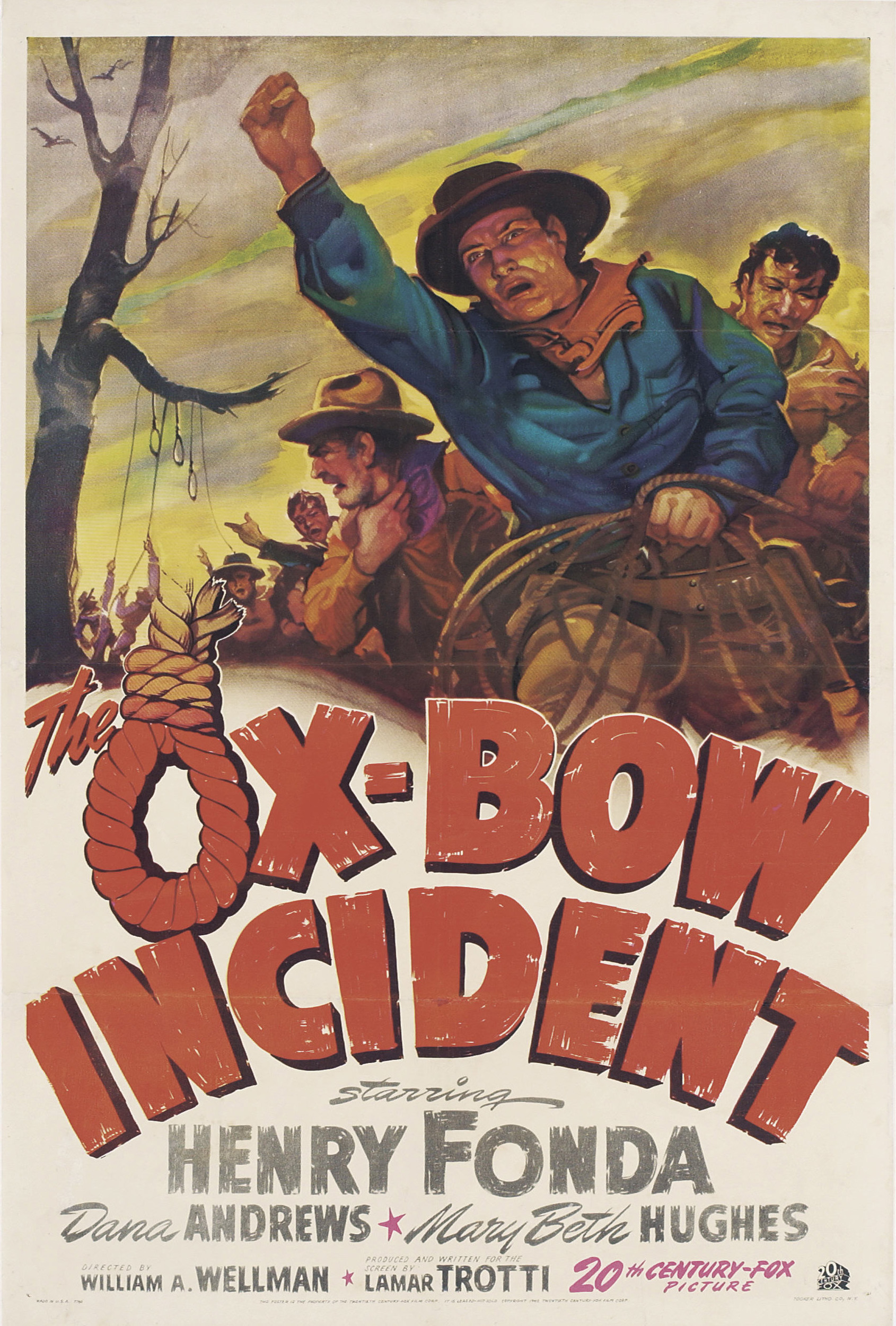
The Ox-Bow Incident, directed by William A. Wellman in 1943, marks a significant entry in the Western genre, deviating from the traditional narratives of heroism and valor prevalent in earlier films. In a time when America was navigating through the complexities of World War II, Wellman’s film emerged as a grim commentary on mob violence and the fragility of morality in societal constructs. Drawing from Walter Van Tilburg Clark's novel, the film's plot revolves around the lynching of two men by a group of townsfolk who prematurely judge them to be guilty of murder. This exploration of mob law hauntingly reflects the darker aspects of human nature, as the film, with its unrelenting narrative style, poses vital questions about conscience and justice that resonate well beyond its historical setting.
Critics have lauded The Ox-Bow Incident for its powerful portrayal of mob mentality, illustrating a community's descent into chaos when faced with fear and the desire for revenge. The film challenges viewers to confront uncomfortable truths about collective responsibility and the moral failures that can arise from drastic decisions made in haste. It is this thematic richness that has led some to label the film as a masterpiece of cinema, elevating the Western genre to one capable of deep philosophical inquiry. The stylized cinematography and the film’s grim tone work in tandem to create an atmosphere that is both haunting and reflective, leaving audiences to grapple with the meanings behind justice and vengeance.
The narrative arc of The Ox-Bow Incident is emblematic of the growing consciousness in American cinema during the 1940s, a time marked by reflection on the nature of authority and the collective conscience. Wellman’s deft direction transforms the film into an unflinching critique of the fascist tendencies inherent in mob violence. In portraying the dangers of unchecked authority when individuals concede their moral compass to the group, Wellman addresses the timeless struggle against tyranny and the ethics of individual versus collective actions. The film becomes a resonant allegory for the moral complexities of power and governance, making it more than just a Western, rather, a profound exploration into the human psyche.
Despite its acclaim, The Ox-Bow Incident was not without its challenges during production. Tensions on set, budget constraints, and the ambitious nature of its themes created a labor of love for the cast and crew. Yet it is through these challenges that the film has flourished in critical discourse, evolving into an enduring text for discussions surrounding fascism and moral accountability within the framework of American values. The film’s powerful performances, led by Henry Fonda, further crystallize its condemnation of mob mentality, illuminating the characters' agonizing struggles between duty and conscience.
In summation, The Ox-Bow Incident stands as a striking exploration of morality, drawing parallels to the complexities of modern society amid the backdrop of America's Western mythos. Its gritty narrative and profound messages continue to resonate, inviting viewers to confront their own moral dilemmas. Much like the labors of love that went into its creation, the film serves as a poignant reminder of the responsibilities we hold as individuals within a collective, it is this unique blend of storytelling and moral inquiry that distinguishes Wellman's work as one of the best in cinematic history.