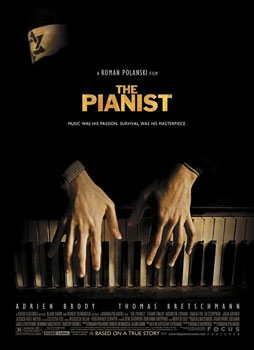
Roman Polanski's The Pianist stands as a haunting testament to the indomitable spirit of humanity against the backdrop of one of history's most cataclysmic events, the Holocaust. This film, released in 2002 and based on the autobiography of Jewish pianist Władysław Szpilman, fits within Polanski's oeuvre as a deeply personal exploration of survival, exile, and the paradox of artistic integrity amidst unimaginable suffering. Grave yet elegant, the film serves not only as an artistic expression but also as a historical reflection on the absurdities of war and human endurance. Polanski, a survivor of similar horrors during his childhood, crafts a narrative that transcends the biographical, presenting a universal meditation on loss and resilience.
Critics have lauded The Pianist for its superb portrayal of human resilience in the face of atrocity. The film's power lies in its combination of understated performances and striking visual storytelling, which elicit both empathy and a disquieting awareness of the historical context. Through Szpilman's journey, viewers experience a disarming simplicity that belies the horror of his circumstances, allowing the artistry of his struggles to shine with stark clarity. The film embodies a gritty realism that captures the surreal and tragic dimensions of survival, as it delves into the depths of despair while maintaining a sense of stoic dignity.
The central theme of artistic survival resonates throughout The Pianist, illustrating how creative expression becomes a lifeline for those caught in dire circumstances. Szpilman, played masterfully by Adrien Brody, experiences profound loss yet clings to his music as a means of maintaining his humanity. This intersection of artistry and survival serves as a poignant commentary on the historical experiences of millions, allowing the film to transcend its specific narrative and speak to broader truths about the human condition. In doing so, Polanski captures both the intimacy of individual suffering and the collective memory of a devastated community, echoing the voices of those who were lost.
Furthermore, the film's portrayal of the absurdity surrounding war paints a stark picture of a civilization under siege, where the sanctity of life is undermined by the cruelty of ideology. Polanski’s directorial choices, his lingering shots and almost documentary-like attention to detail, place the audience in Szpilman’s world, engaging them in a visceral experience that lingers well beyond the film’s conclusion. This haunting depiction of history serves as a disarmingly simple yet profound exploration of morality, highlighting the contradictions inherent in human nature, especially during times of upheaval and chaos.
In conclusion, The Pianist is not merely a narrative about survival but a reflective piece that urges viewers to confront the grim realities of the Holocaust while celebrating the resilience of the human spirit. Polanski’s delicate balance of historical accuracy with personal storytelling creates a work that is both intensely personal and universally relevant. As a pivotal contribution to Holocaust cinema and to Polanski’s distinguished career, The Pianist affirms the enduring power of art as a form of resistance against oppression, echoing the need to remember and honor those who suffered and died in the darkest chapters of history.