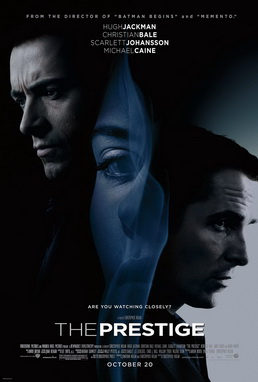
Christopher Nolan's The Prestige presents a labyrinthine narrative that intertwines the lives of rival magicians, Robert Angier and Alfred Borden, embarking on a fierce competition in late 19th century London. This film not only embodies Nolan's characteristic intertwining of intricate plots and themes of identity and obsession, but it also stands as a commentary on the nature of art itself, inviting the audience to question the thin line between illusion and reality. In the grand scheme of cinematic history, The Prestige emerges as a distinguished work that challenges viewers to engage deeply with its narrative, making it a fitting addition to Nolan's oeuvre, which often delves into the complexities of time and perception.
Critics have lauded The Prestige for its dazzling visuals and superb craftsmanship, which form an immaculate backdrop to the twisting tale of rivalry and deception. At its core, the film explores the destructive nature of obsession, as both magicians sacrifice their relationships and ultimately their identities in pursuit of perfection. This theme of self-destruction under the weight of ambition resonates throughout the film, highlighting how the pursuit of greatness can dissolve one’s sense of self, a concept masterfully illustrated through the complexities of memory and the reliability of perception. The plot's convolution and its layers of misdirection serve to keep audiences actively engaged, constantly reevaluating their understanding of the characters and their motivations while caught in the whirl of magic and illusion.
As critics have pointed out, the film carries a certain self-importance that can be polarizing, with some viewers feeling it leans too heavily into its own eccentricity and complexities, potentially veering into the territory of the overly convoluted. While some found this dizzying and engaging, others criticized it for leading to disappointment as the intricate plot twists reached a resolution that may not satisfy every viewer's yearning for clarity. Still, it is this very nature of unpredictability that solidifies The Prestige as a modern classic in storytelling, a film that revels in its layers while simultaneously demanding the audience's involvement in unpacking its mysteries.
Ultimately, The Prestige continues to spark conversations about illusion, memory, and the lengths to which individuals will go to be recognized in their crafts. The film’s narrative complexity is beautifully complemented by its stunning cinematography and score, resulting in a cinematic experience that is both beautiful and, at times, disorienting. The tensions and themes explored resonate with audiences, making it one of Nolan's standout entries that speaks to the intersection of art and the human condition, offering a thrilling, albeit sometimes frustrating, exploration of ambition and rivalry in the world of magic. As the curtain falls on this intricately woven tale, viewers are left with an invitation to reflect on their engagement with the art of storytelling itself, echoing the sentiments of the magicians at the heart of this captivating narrative.