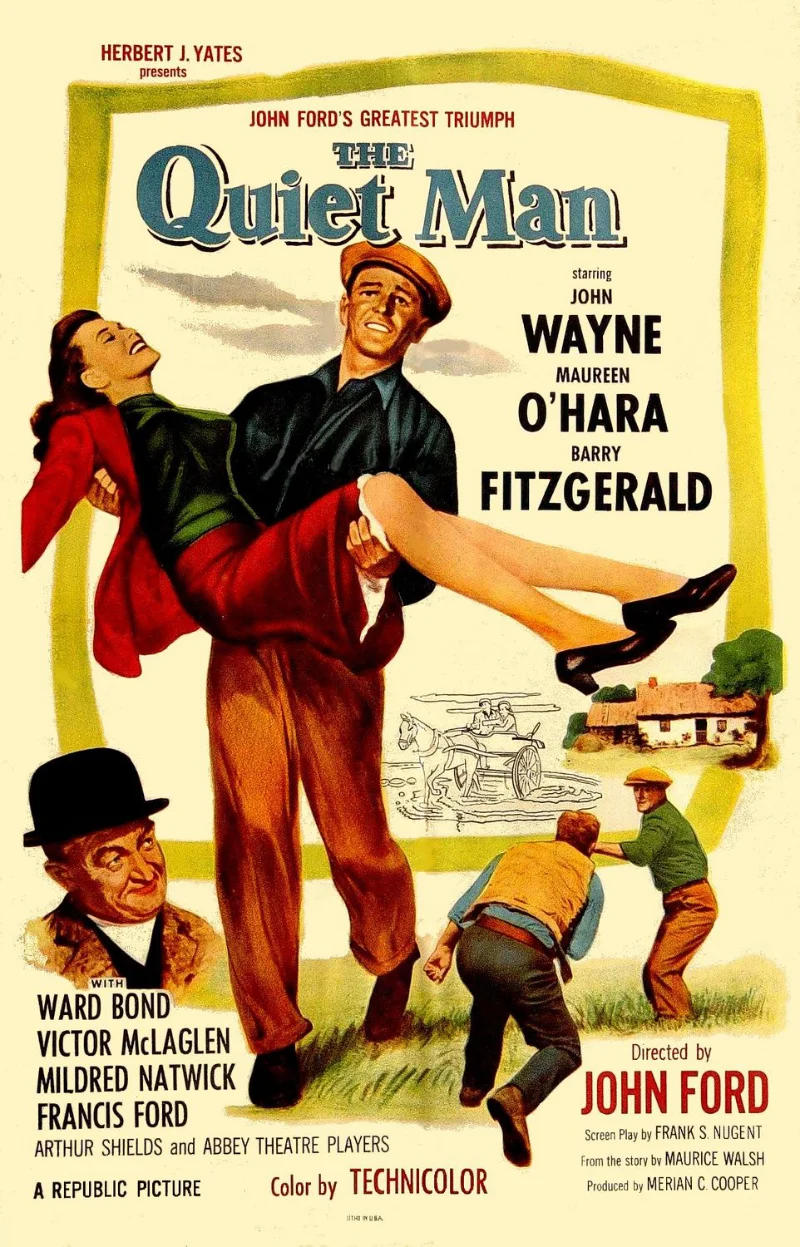
In the rich tapestry of American cinema, few films are as emblematic of both nostalgia and cultural identity as The Quiet Man, a 1952 classic directed by John Ford. As a master of the Western genre, Ford turned his gaze to Ireland, crafting a story that blends epic romanticism with intimate community dynamics. This film stands in stark contrast to the prevailing cinematic themes of its time, showcasing Ford's ability to navigate both the grand and the personal. Set against the lush Irish landscape, The Quiet Man encapsulates the tension between cultural repression and artistic expression, illustrating the director's keen eye for capturing the essence of a place and its people.
The Quiet Man centers on Sean Thornton, a retired American boxer who returns to his ancestral home in Ireland. Through Thornton's journey, the film explores themes of nostalgia for a simpler, idyllic past while grappling with the complexities of cultural identity. Critics have noted that this film portrays not only the personal struggles associated with returning home but also the wider, often stereotypical representations of Irish life. The charming yet fictitious village depicted in the film, with its tightly woven community dynamics, serves to highlight the distinctiveness of Ford's vision, where the allure of the Irish countryside is as significant as the characters who inhabit it.
Characterization plays a crucial role in the film, with Thornton portrayed as both charismatic and introspective, embodying the dual themes of strength and vulnerability. His relationships with local residents, particularly with fiery Mary Kate Danaher, evoke a range of emotions rooted in passion and conflict. Ford’s direction allows for an intimate portrayal of these dynamics, a hallmark of his style that resonates deeply with audiences seeking genuine human connection. As the characters navigate their cultural landscape, the film poses poignant questions about reconciliation with the past and the pull of heritage.
Visually, The Quiet Man is a triumph, featuring stunning cinematography that emphasizes the beauty of the Irish landscape. Ford's directorial style is on full display, using sweeping shots that evoke both grandeur and warmth, combining the epic and the homey in a way that feels fluid and natural. Critics have lauded Ford's ability to balance the aesthetic with substance, ensuring that the visual storytelling supports the film’s broader themes of identity and belonging. This artistic expression not only enhances the narrative but also allows the audience to immerse themselves in the cultural context of the time.
Overall, The Quiet Man is much more than a romantic comedy; it is a meditation on cultural identity, community, and the often unbridgeable gap between ideals and reality. Its critical reception has solidified its place in cinema history as a quintessential example of Ford's profound understanding of human emotion intertwined with cultural heritage. In returning to Ireland, Ford offers an ode to his own roots, and through Sean Thornton’s journey, he simultaneously reflects on the contradictions of nostalgia, an emotional landscape that continues to resonate with audiences today.