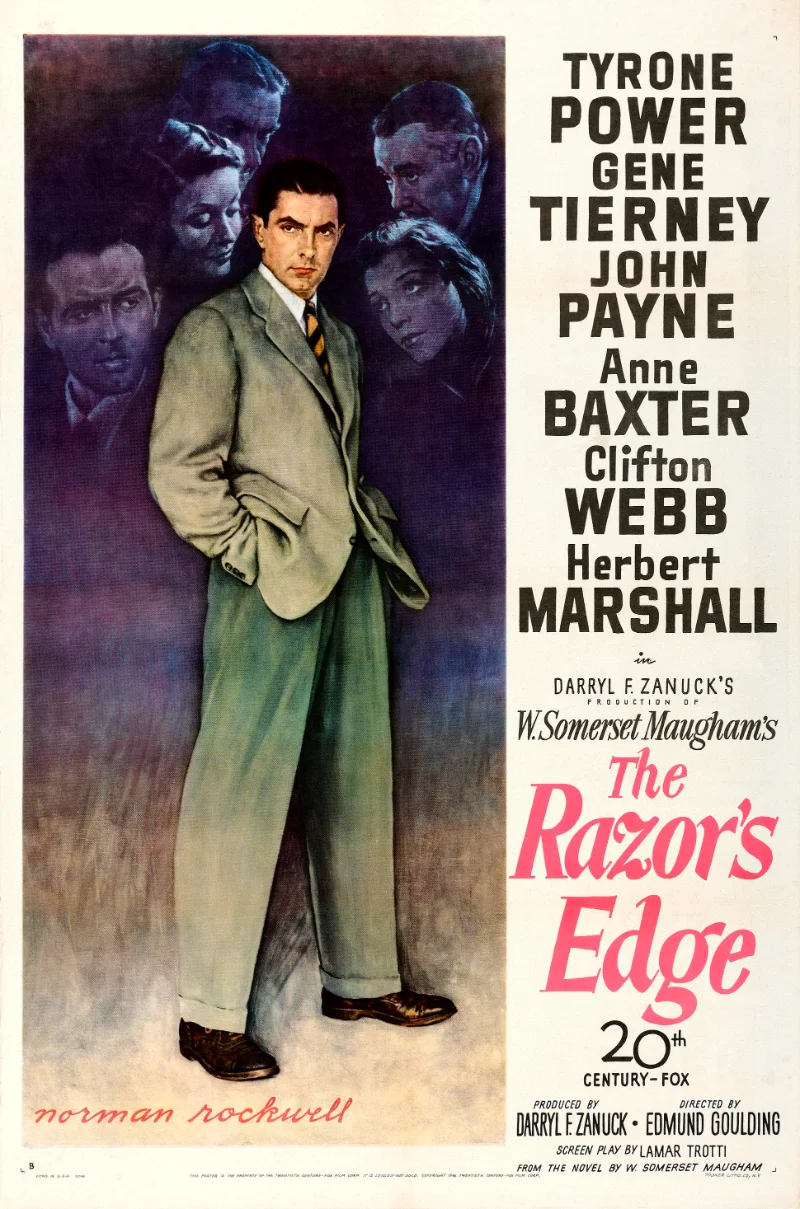
The Razor's Edge (1946), directed by Edmund Goulding, stands as a profound exploration of self-discovery and spirituality against the backdrop of post-war America. Adapted from W. Somerset Maugham's novel, the film presents a character-driven narrative that follows Larry Darrell, played by Tyrone Power, as he grapples with the moral dilemmas of a society focused on wealth and status. It is set during a time when the scars of World War I still linger in the collective consciousness, amplifying the film's themes of trauma, love, and loss. This work marks a significant entry in Goulding's oeuvre, who is known for his ability to entwine emotional depth with lush visual storytelling.
The critical reception of The Razor's Edge reflects a consensus that acknowledges its moralistic and somewhat idealistic approach to life's existential questions. Critics note the film's lengthy narrative allows for an engrossing portrayal of its themes, making it a reflective piece on the disparity between the spiritual and the material realms. Larry’s journey from the chaos of war to a quest for enlightenment resonates deeply in an era where many were searching for meaning beyond the superficial gloss of upper-class existence. The lavish cinematography and character-driven storytelling beautifully underscore the contrasts between different social classes, while also illuminating the profound inner conflicts faced by individuals.
The film delves into spirituality, presenting Larry as a seeker navigating through the societal expectations of wealth and success personified by characters like Isabel Bradley, brilliantly portrayed by Gene Tierney. Their love story, marred by loss and misunderstandings, reflects the broader moral dilemmas faced by the characters as they each pursue their own versions of happiness and fulfillment. The melodramatic elements of the narrative serve to heighten the stakes of Larry’s quest, making the audience acutely aware of the intricate balance between love, loss, and the search for purpose. Goulding’s treatment of these themes invites viewers to reflect on their own lives and the societal pressures that shape them.
Moreover, The Razor's Edge invites comparisons to other films of its time, which frequently dealt with themes of identity and disillusionment. However, few captured the spirit of seeking transcendence and personal truth quite like this adaptation. Its blend of high drama and philosophical inquiry ensures its place as an intriguing piece of cinema that stands apart from the typical fare of 1940s Hollywood. As the characters navigate the complexities of their emotional landscapes, audiences are left contemplating the true essence of life, a compelling reminder of the enduring quest for meaning amidst chaos and materialism. The film leaves a luminous mark, encouraging viewers to ponder their own paths, just as Larry does, on the razor's edge of existence.