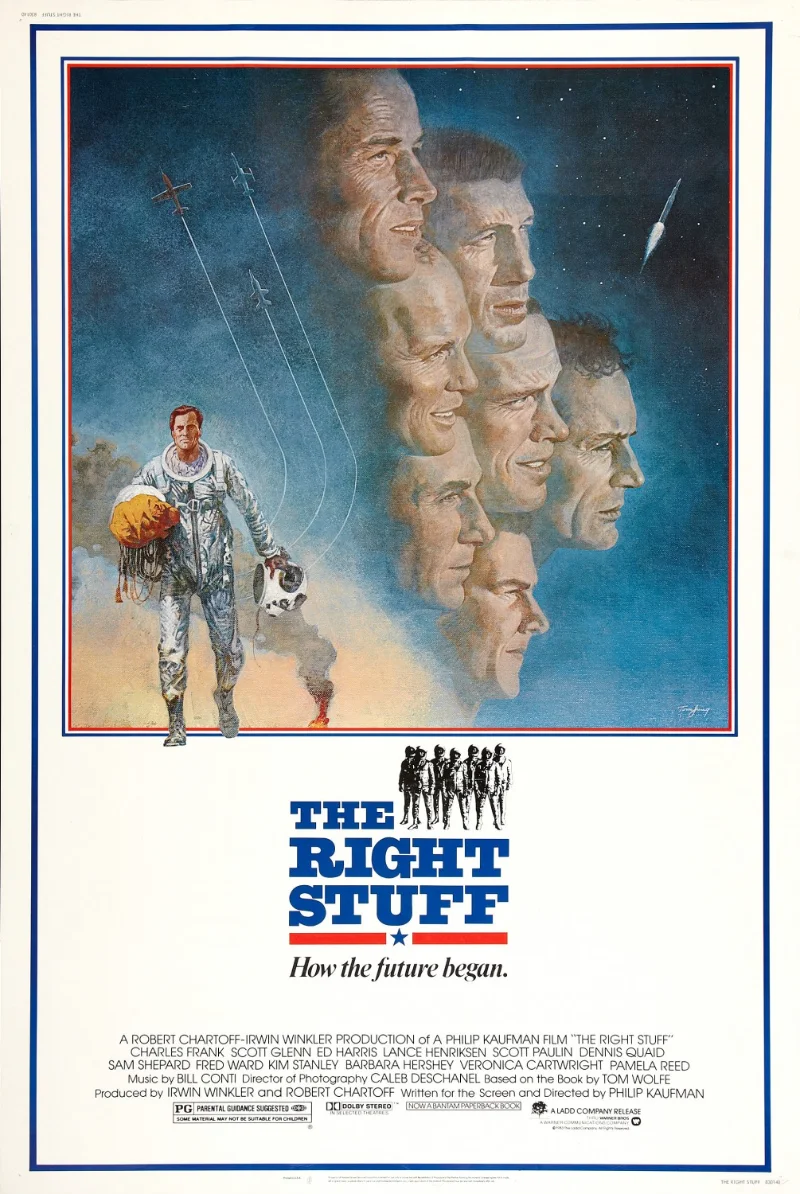
Philip Kaufman's The Right Stuff (1983) stands as a landmark in American cinema, blending historical narrative with a deep exploration of the human spirit during a pivotal moment in modern history. The film chronicles the early days of the U.S. space program, focusing on the Mercury Seven astronauts and their journey from test pilots to national heroes. In the broader context of Kaufman's work, The Right Stuff reflects his ability to weave complex narratives that delve into themes of aspiration, bravery, and the multifaceted nature of American identity. This film, marked by its epic scope and assured direction, remains one of the definitive representations of the American heroism that characterized the Space Race era.
Critics have consistently praised The Right Stuff for its remarkable engagement with themes of teamwork and individualism. Kaufman's direction, coupled with a uniformly excellent ensemble cast, presents a compelling depiction of the astronauts' camaraderie, underscoring how their collective efforts were crucial to achieving the extraordinary feats of space exploration. Simultaneously, the film does not shy away from the personal struggles and ambitions of these individuals, crafting a narrative that is as much about their individual aspirations as it is about the collaborative endeavor of space travel. This duality enriches the viewing experience, rendering the film both rousing and relatable.
Another significant theme that emerges is historical accuracy. Kaufman meticulously reconstructs the events surrounding the Mercury program, offering audiences a glimpse into the real-life challenges and triumphs faced by the space pioneers. This attention to detail not only serves to honor the legacy of these figures but also immerses viewers in the exhilarating yet perilous nature of early space exploration. The film masterfully balances factual representation with dramatic flair, ensuring that its historical elements engage while still captivating the audience's emotions.
Moreover, The Right Stuff extends beyond mere biography; the film acts as a reflection on American values in the face of adversity. The portrayal of the astronauts as both flawed and heroic encapsulates the essence of what it means to be a hero in a complex world. Their journeys resonate as a testament to the spirit of adventure and the relentless pursuit of progress, aligning with the mid-20th century ethos of American exceptionalism. This notion serves as a rallying call, inviting viewers to reflect on their own definitions of bravery and achievement.
Ultimately, The Right Stuff is not just a film about astronauts; it is a multifaceted exploration of the very fabric of American society and its relentless pursuit of greatness. Kaufman's assured storytelling, combined with an engaging narrative and rich character development, cements the film's place in the pantheon of cinematic history. Its epic scope coupled with authentic portrayals offers a compelling lens on an era marked by both competition and collaboration, making it a timeless piece that resonates with contemporary audiences as much as it did with those in the early 1980s.