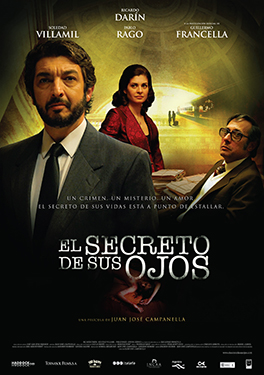
The Secret in Their Eyes, directed by Juan José Campanella, stands as a remarkable entry in the canon of contemporary Argentine cinema and highlights the director's capacity for intertwining personal and political narratives. Released in 2009, this film not only garnered international acclaim but also secured the Academy Award for Best Foreign Language Film. Campanella, known for his ability to blend genres, strikes a unique balance between a haunting thriller and a poignant exploration of love, obsession, and justice. With a backdrop set against Argentina's turbulent political history, the film encapsulates the haunting effects of unresolved crimes amid a society grappling with its dark past.
Critics have unanimously recognized the film for its intricate plot that evolves through a nonlinear narrative, pulling viewers into the obsessive pursuit of justice by its protagonist, Benjamín Esposito. This obsession is deeply entwined with an unresolved crime that remains a constant source of anguish for him. The film cleverly portrays Esposito's quest not only as a struggle against a corrupt system but also as a deeply personal journey intertwined with his unspoken love for a colleague and the haunting memories of a crime that threatens to consume him. The emotional undercurrents in The Secret in Their Eyes elevate it beyond a mere procedural thriller, inviting reflections on love, loss, and the moral complexities of seeking truth against a backdrop of fascism and political intrigue.
The film's critical consensus leans toward its beautifully calibrated storytelling and engaging performances, particularly those of Ricardo Darín as Esposito and Soledad Villamil as his love interest, Irene. Their chemistry, steeped in unfulfilled longing, serves to remind audiences of the human capacity for hope amid despair. Campanella’s direction is marked by a distinctive visual style that captures both the somber reality of Argentina's past and the personal stakes involved in the pursuit of justice. However, some reviews indicate that the film occasionally relies on traditional narrative tropes, veering into predictability; nonetheless, this approach is compensated by its emotional depth and the authenticity it brings to its characters' struggles.
In The Secret in Their Eyes, the interplay between the personal and the political is not just a device but a comment on the fragility of human connections in times of crisis. While the film unfolds a compelling mystery, it is equally a meditation on the scars left by unresolved trauma. The haunting presence of the crime shadows the characters’ lives, ultimately shaping their decisions and relationships. Campanella's work invites viewers to confront uncomfortable truths about justice and memory, making it not only a suspenseful thriller but also a reflection on collective guilt and the pathways toward redemption.
Ultimately, The Secret in Their Eyes stands as a striking example of how cinema can delve into the complexities of the human experience while remaining firmly rooted in the socio-political realities of its time. Campanella’s ability to weave a narrative that prioritizes character development alongside plot reveals the richness of Argentine cinema and its artistic voices. In engaging with themes such as obsessive pursuit, unresolved crime, and the haunting effects of a nation's historical darkness, the film resonates with universal truths and reaffirms the power of storytelling as a means of grappling with the past.