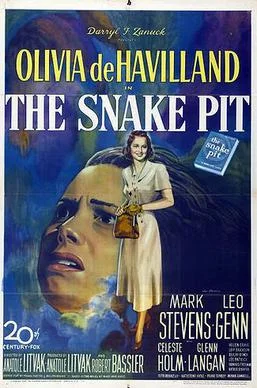
The Snake Pit, directed by Anatole Litvak in 1948, stands as a harrowing exploration of mental illness within the confines of psychiatric institutions. This film, notable for its critical lens on the treatment of the mentally ill, is a crucial entry in both the cinematic history of the late 1940s and Litvak's own oeuvre. The narrative centers on a young woman named Virginia, played by Olivia de Havilland, who navigates the disorienting maze of her mental breakdown and recovery, all set against a backdrop that highlights the patriarchal structures prevalent in mid-century society. Her journey is not just about self-discovery; it also serves as a commentary on the institutional methodologies that treat patients more like numbers than individuals deserving compassion.
The critical consensus surrounding The Snake Pit emphasizes its groundbreaking nature, particularly in the manner it vividly depicts the complexities of mental illness. Audiences were shocked by the bleak realities represented on screen, showcasing the mistreatment and isolation faced by patients in psychiatric facilities, dubbed "snake pits." Critics often describe Litvak's direction as tightly controlled yet emotionally expressive, allowing for a powerful portrayal of Virginia's psychological struggles without resorting to melodrama. The film’s minimalist aesthetic complements its themes, creating a raw depiction of mental anguish that resonates deeply with viewers, even decades after its release.
Important to note is the historical context in which The Snake Pit emerged. The late 1940s were a significant period in the evolution of psychiatric practices, with increasing calls for reform in how patients were treated. Litvak's film provided a much-needed critique of the often dehumanizing conditions of mental health institutions, positioned within the framework of a society grappling with the aftereffects of World War II and the changing role of women. As such, the film was both a reflection of and a challenge to societal norms, particularly in relation to gender roles and the prevailing patriarchy that dictated women's experiences in both public and private spheres.
From a box office perspective, The Snake Pit proved to be a significant success, marking one of the biggest hits for de Havilland and establishing itself as an important cultural touchstone in film history. It paved the way for future cinematic explorations of mental illness and the compassion necessary in treating it, influencing not only filmmakers but also public perceptions of psychiatric care at the time. Anatole Litvak, a Russian-born director who found his place in Hollywood, strengthened his legacy with this film, affirming his ability to blend engaging storytelling with profound social commentary.
Ultimately, the legacy of The Snake Pit lies in its provocative treatment of mental health, which continues to resonate today as discussions surrounding mental illness and treatment reform remain pertinent. Litvak’s work opened the door for more nuanced portrayals of psychological struggles in cinema, challenging both audiences and filmmakers alike to reconsider how society engages with the concept of mental health and the humanity of those who inhabit these complex narratives. As viewers reflect on Virginia's journey through the harrowing experiences of the institutional system, The Snake Pit remains a critical reminder of the importance of empathy and understanding in the face of mental illness.