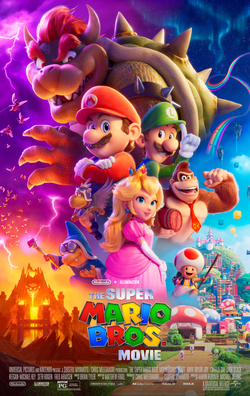
Arriving as the latest installment in a long history of video game adaptations, The Super Mario Bros. Movie (2023), directed by Aaron Horvath and Michael Jelenic, seeks to capture the essence of one of the most recognizable franchises in gaming history. While the film aims to engage a new generation of audiences and evoke nostalgia for fans of the beloved plumber and his adventures, it ultimately finds itself caught in a complicated web of expectations, both from long-time fans and newcomers alike. The directors, renowned for their work on animated series, attempt to translate the joys of the Mario universe to the big screen with a blend of vibrant visuals and fast-paced storytelling that aims for broad appeal.
Critical reception has been decidedly mixed, with many reviewers pointing to the film's heavy reliance on nostalgia as both a strength and a weakness. Fans of the franchise will recognize familiar settings, characters, and iconic sound bites, yet this familiarity does not overshadow the film's missed opportunities for creativity. Rather than pushing the narrative boundaries typically expected from cinematic adaptations, the film often feels hollow and uninspired, opting for recognizable elements that, while entertaining on a surface level, lack depth and innovation. Critics have noted that despite its colorful animation and energetic pacing, The Super Mario Bros. Movie frequently lapses into a chaotic and scattershot experience that feels more like a checklist of fan service than a cohesive story.
Furthermore, the film faces challenges in character development, as many performances fall flat against the backdrop of vibrant animation. Characters are primarily defined by their established traits rather than any new dimensions that could have made them more engaging. This lack of depth contributes to an overall sense of blandness, highlighting the distance between visual splendor and meaningful narrative engagement. Critics lament that while the film is visually striking, it often sacrifices soulfulness in favor of swift, noisy sequences that detract from character arcs and emotional resonance.
Ultimately, The Super Mario Bros. Movie encapsulates both a nostalgic nod to a cherished franchise and a cautionary tale about the challenges of adaptation. It serves as a reminder that translating beloved source material into a new format is fraught with difficulty, and that the goal of appealing to fans can sometimes lead to a soulless product devoid of true creativity. The balance between honoring the source material and innovating has been an ongoing struggle in the realm of adaptations, and this film exemplifies the pitfalls that come with prioritizing audience recognition over narrative depth. While it may find success with younger audiences and dedicated fans seeking a quick hit of nostalgia, many critics feel that the film ultimately falls short of its potential, leaving a sense of discontentment amid colorful visuals and fan-familiar charm.