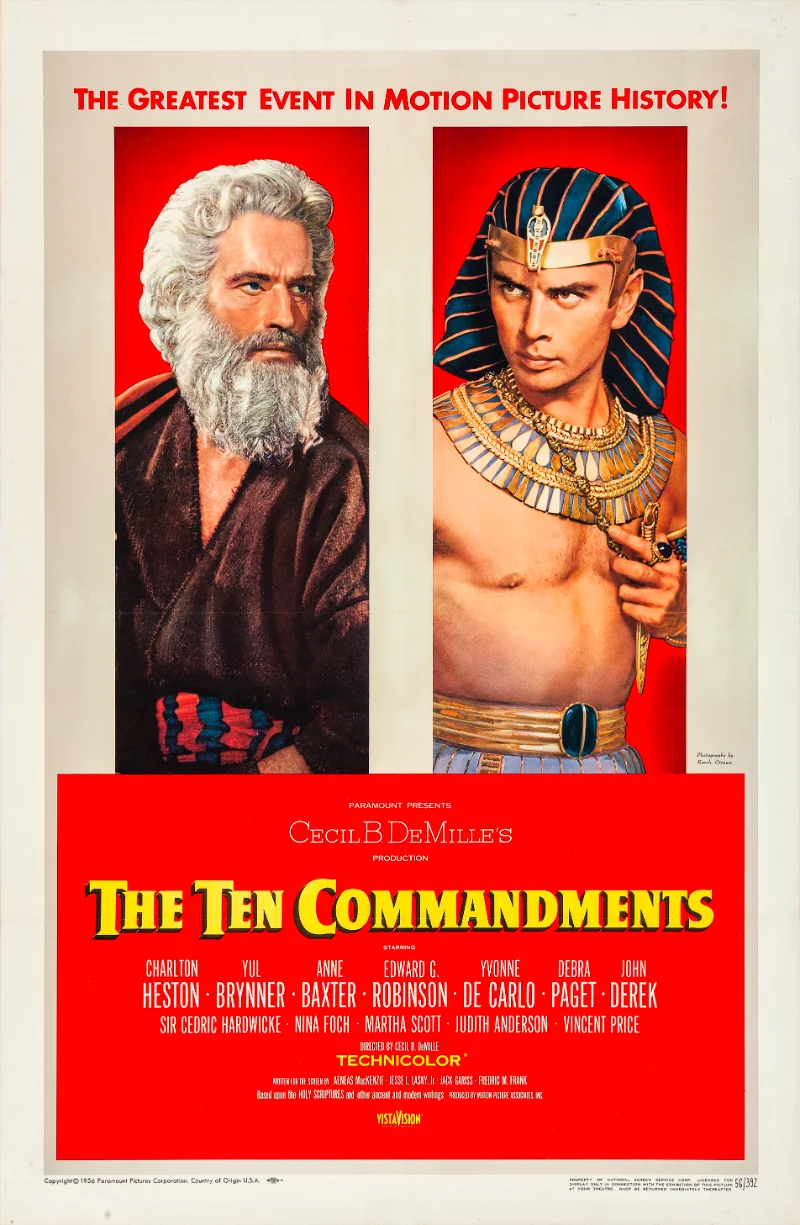
Cecil B. DeMille's The Ten Commandments, released in 1956, stands as a quintessential piece of epic cinema that showcases the director's penchant for grandiosity and spectacle. As one of the last great works of Hollywood's Golden Age, the film encapsulates DeMille's mastery in blending religious themes with monumental storytelling. Known for his lavish productions, DeMille's triumph with The Ten Commandments cements it as a landmark in the genre, embodying both a significant artistic vision and the historical context of its time. In many ways, this film serves as a culmination of DeMille's cinematic explorations into faith, morality, and the human spirit, reflecting his longstanding fascination with biblical narratives.
Critics have frequently noted the film's grandiose style, with its sweeping landscapes, elaborate sets, and engaging special effects that were groundbreaking for the 1950s. The epic storytelling unfolds with a sense of heroic grandeur, depicting the life of Moses in a manner that blends religious reverence with spectacular entertainment. Yet, this level of spectacle often leads to a degree of pompousness, with some viewing the film as excessively conservative and propagandistic. The heavy-handed moral messaging can detract from the emotional depth of the film, as the narrative sometimes prioritizes dramatic flair over nuanced character development.
Religious themes permeate the narrative, inviting audiences to engage with issues of faith, freedom, and divine intervention. Despite its ideological leanings and the often overt political undertones, there is an undeniable power in the film's portrayal of redemption and justice. Through its dramatization of the Exodus story, The Ten Commandments resonates with universal themes of liberation that echo across different cultures and eras. While its political subtext may appear dated today, the film’s exploration of faith remains potent, capturing the struggles of individuals against overwhelming odds.
Audience reception has revealed the film's entertaining qualities, showcasing a star-studded cast, led by Charlton Heston in the iconic role of Moses. This charismatic performance, alongside visually striking sequences, such as the parting of the Red Sea, underscores the film’s appeal as a communal cinematic experience. Yet, alongside moments of exhilarating spectacle, some viewers may find themselves reflecting on the film's exaggerated sense of righteousness, which fits snugly within the era's conservative paradigms. Whether appreciated for its artistry or critiqued for its ideological overtones, The Ten Commandments remains a powerful canvas of its time, revealing much about the interplay between entertainment and moral values in American cinema.
In a broader context, The Ten Commandments serves as both a hallmark of DeMille's artistic legacy and a reflection of a society grappling with its collective identity through the lens of religion and morality. The film continues to inspire discussion around its themes, aesthetic achievements, and political implications, ensuring that it holds a significant place in the annals of film history. As we reassess its impact today, The Ten Commandments remains a captivating artifact that stirs dialogue about the relationship between faith, art, and the social beliefs that shape our world.