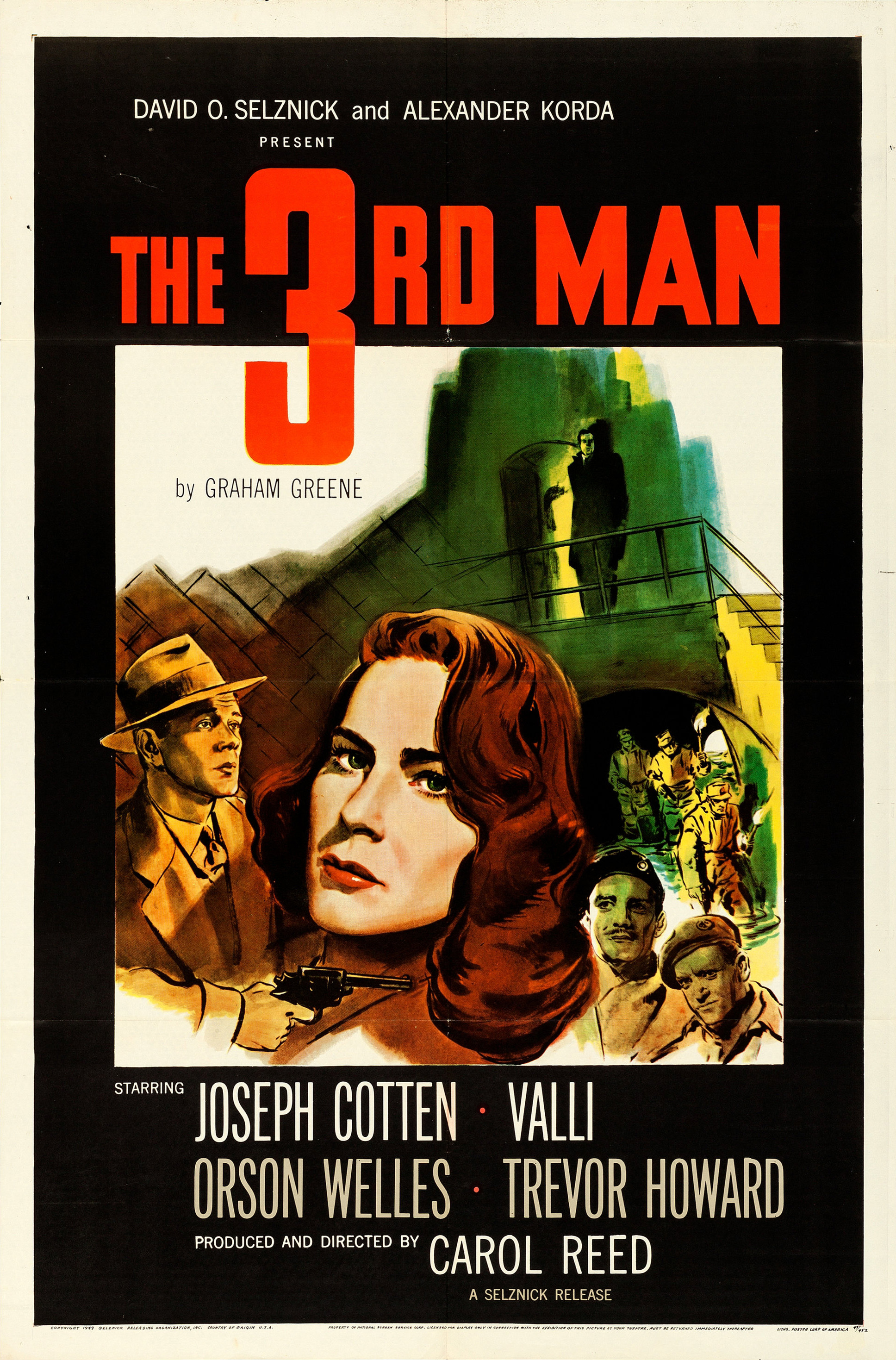
Carol Reed's The Third Man is a cinematic masterpiece that stands as a landmark of post-war film noir, reflecting the existential despair and moral ambiguity of its time. Set against the haunting backdrop of Vienna's war-torn streets, the film encapsulates the city divided into sectors by the Allied powers, symbolizing not only the physical divisions but the profound psychological and ethical rifts created by the aftermath of World War II. Reed's expert direction, combined with Graham Greene's sharp screenplay, immerses viewers in a world where trust is scarce and survival often necessitates betrayal, crafting an atmosphere that is both thrilling and profoundly melancholic.
Critics have consistently praised The Third Man for its richly atmospheric cinematography, courtesy of Robert Krasker, which captures the shadowy, labyrinthine alleys of Vienna with haunting beauty. This visual composition complements the film's intricate narrative of intrigue and deception. The protagonist, Holly Martins, finds himself embroiled in a morally complex waltz between friendship and betrayal as he seeks to uncover the truth about his enigmatic friend Harry Lime. As Martins navigates this treacherous landscape, the film raises poignant questions about loyalty, integrity, and the price of truth, emphasizing that in a world ravaged by conflict, binary notions of good and evil often yield to a more nuanced, cynical understanding of human nature.
At the heart of The Third Man lies a profound exploration of existential loss. Reed portrays a city and its characters grappling with the remnants of war, where the ghosts of the past linger in every shadow. The film's noir elements, its morally ambiguous characters, intricate plotting, and pervasive sense of doom, invite viewers to contemplate the broader implications of personal and collective history. This existential lens resonates throughout the film, emphasizing an innate sense of futility and the struggle for meaning in a fractured world, where friendships can quickly become transactional and trust proves elusive.
Romanticism weaves through the film’s narrative, presenting Vienna not just as a battleground for intrigue but as a city of lost ideals and unfulfilled desires. The romantic pursuits within the story are intertwined with betrayal, highlighting the complexity of human relationships in a time marked by cynicism and disillusionment. This interplay between romantic aspiration and grim reality culminates in a hauntingly beautiful climax, underscoring the idea that the search for meaning, even amid moral chaos, remains a deeply human endeavor.
Ultimately, The Third Man is more than a mere thriller; it is an enduring critique of the post-war psyche, reflecting the pervasive uncertainty that defined an era. Reed's masterful orchestration of atmosphere and character development, alongside Greene's incisive script, leaves a lasting imprint on the landscape of cinema. As audiences revisit this iconic film, they are reminded not just of a bygone historical moment, but of the unending struggle between light and dark that defines the human experience.