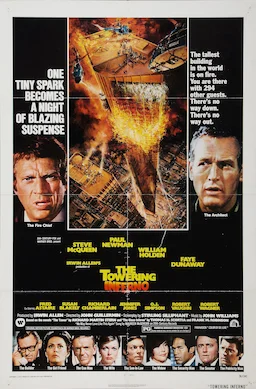
The release of The Towering Inferno in 1974 marked a significant moment in the disaster film genre, solidifying its place in cinema history as a quintessential example of the form. Directed by John Guillermin, this ambitious production brought together an all-star cast, including Paul Newman, Steve McQueen, and Faye Dunaway, establishing it not only as a thrilling spectacle but also a character-driven drama. The film captures the zeitgeist of the 1970s, a decade in which filmmakers increasingly explored the darker aspects of modern life through the lens of disaster, reflecting societal anxieties about technology, urban living, and safety in the face of calamity. In a sense, The Towering Inferno epitomizes those fears, while simultaneously offering a narrative rich with themes of heroism, human resilience, and the struggle against overwhelming odds, all set against the striking backdrop of architectural grandeur.
Critics have praised The Towering Inferno for its ability to weave complex narratives around disaster, combining intense thrills with moments of levity and even satire. The film captures the palpable tension of a catastrophic event, illustrating the chaotic yet inspiring responses of individuals faced with life-threatening circumstances. The portrayal of fire not merely as a foe but as a catalyst for both tragedy and camaraderie resonates deeply, creating opportunities for characters to rise to the occasion. The depiction of heroism underscores a collective human spirit, where each person, whether an architect, firefighter, or a simple bystander, plays a pivotal role in the unfolding drama, reminding us of our interconnectedness during crisis moments.
At its core, the film also engages with themes of modern architecture, exploring the fragile beauty of man-made edifices in the face of nature’s uncontrollable wrath. The titular towering inferno serves not just as a backdrop but symbolizes the precariousness of humanity's achievements. This focus on architecture acts as a nostalgic nod to postwar optimism and the drive for progress, while simultaneously serving as a cautionary tale about the potential hazards embedded within contemporary advancements. As the inferno engulfs the ornate structure, the film invites viewers to reflect on the delicate balance between marveling at human innovation and recognizing the latent dangers it entails.
Additionally, the film's craftsmanship, marked by impressive cinematography and special effects for its time, further elevates the narrative. The visual spectacle captivates audiences, while its dramatic score intensifies the emotional stakes, crafting an experience that is as thrilling as it is engaging. Critics have remarked on how this combination of a gripping plot and elaborate set pieces continues to resonate, providing not only entertainment but also a sense of reflection on our own vulnerabilities. The film's nostalgic charm and timeless appeal stem from its unique blend of drama, comedy, and a touch of the apocalyptic, solidifying its status in the canon of disaster cinema.