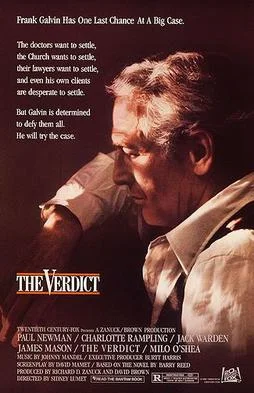
Released in 1982, The Verdict stands as a hallmark of Sidney Lumet's illustrious career, marking a poignant exploration of redemption and legal drama. Lumet, known for his profound ability to delve into human emotions and moral complexities, delivers a film that is both gripping and authentically compelling. Set against the backdrop of a fraught courtroom, the narrative follows Frank Veber, played masterfully by Paul Newman, who is a disillusioned attorney grappling with his personal demons, including alcoholism. This portrayal not only reflects the struggles of the individual but also serves as a commentary on the flaws within the legal system, elevating the film beyond a mere courtroom drama to an intense exploration of human resilience and ethical conflict.
Critics have largely praised The Verdict for its emotional depth and powerful storytelling. The film masterfully interweaves themes of personal struggle and moral conflict, as Veber fights not only for justice for his client but also for his own redemption. The courtroom scenes are executed with precision and tension, immersing audiences in the high stakes of legal battles. Newman's performance, marked by quiet intensity, evokes a sense of empathy and connection, while the supporting cast, including a notably formidable Charlotte Rampling, enhances the narrative's complexity, bringing their characters to life with authenticity.
One of the most profound aspects of The Verdict is its exploration of redemption. As Veber navigates his flaws and failures throughout the film, viewers witness a journey that transcends the conventional narrative arc. His quest for justice becomes intertwined with a personal awakening, prompting reflections on morality, integrity, and what it truly means to atone for one’s past mistakes. Lumet captures the essence of this struggle with a deft touch, emphasizing that the fight for justice often mirrors the fight within oneself.
In the landscape of cinema, The Verdict remains a significant work, not only highlighting Lumet’s ability to combine riveting drama with philosophical inquiry but also leaving an indelible mark on the legal film genre. Its nuanced portrayal of flawed protagonists and the relentless pursuit of moral clarity resonates deeply, proving that even in the face of tremendous adversity, the desire for redemption can catalyze significant personal and societal change. Thus, the film endures as a poignant reminder that justice and redemption are often fraught with complexities, yet their pursuit remains a noble endeavor.