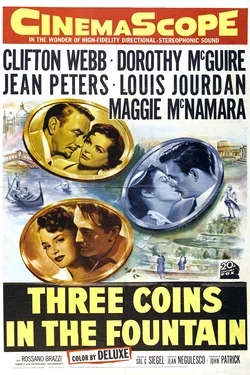
In the panorama of 1950s cinema, Three Coins in the Fountain stands as a quintessential romantic melodrama, encapsulating the era's fascination with love amidst the picturesque backdrop of Italy. Directed by Jean Negulesco, a filmmaker known for his ability to weave emotional narratives with striking visuals, the film is often viewed through the lens of his European background, which imbues it with a distinct charm and authenticity. The film's impact is amplified by its memorable score composed by Alfred Newman and the captivating song "Three Coins in the Fountain," which contributed to its box office success and subsequent Academy Awards recognition.
Critically, the film is noted for its formulaic yet engaging plot that revolves around three American women in Rome seeking romance. This narrative is underscored by themes of cultural exploration and the allure of urban romance. The characters embody the aspirations of many who dream of a transformative love experience in a foreign locale, making the film resonate deeply with audiences of that era. While some reviewers have deemed the film as somewhat conventional, preferring adventure over the more subdued romantic encounters, it remains a heartfelt portrayal of the quest for love, a quintessential aspect of the human experience.
The performances within Three Coins in the Fountain are among the best of the era, showcasing strong portrayals by an ensemble cast that includes Dorothy McGuire, Jean Peters, and Maggie McNamara. Their chemistry, coupled with Negulesco's adept direction, creates a poignant exploration of relationships that speak to both the hopes and disappointments often found in the search for love. Critics have lauded the film for its tailored performances and witty dialogues, further enhancing its status as a classic in romantic cinema.
Visually, Three Coins in the Fountain is a masterclass in costume design that captures the vibrant and fashionable aesthetics of 1950s Italy. This attention to detail serves not only to please the eye but also to provide a cultural context that enriches the viewing experience. By skillfully combining striking cinematography with lyrical storytelling, Negulesco crafted a film that transcends its time, making it relevant to discussions of cinematic artistry and the evolution of romance in film.
In retrospective analyses, Three Coins in the Fountain has garnered recognition not only for its box office achievements but also for paving the way for future romantic melodramas that blend cultural exploration with personal narrative. As the film continues to be celebrated for its passionate performances and lush scenery, it stands as a testament to the glamour and emotional depth that characterize a significant period in Hollywood history. In an era increasingly defined by its dialogue between American and European cinema, Negulesco's work here remains a delightful exploration of love and the magic of Rome.