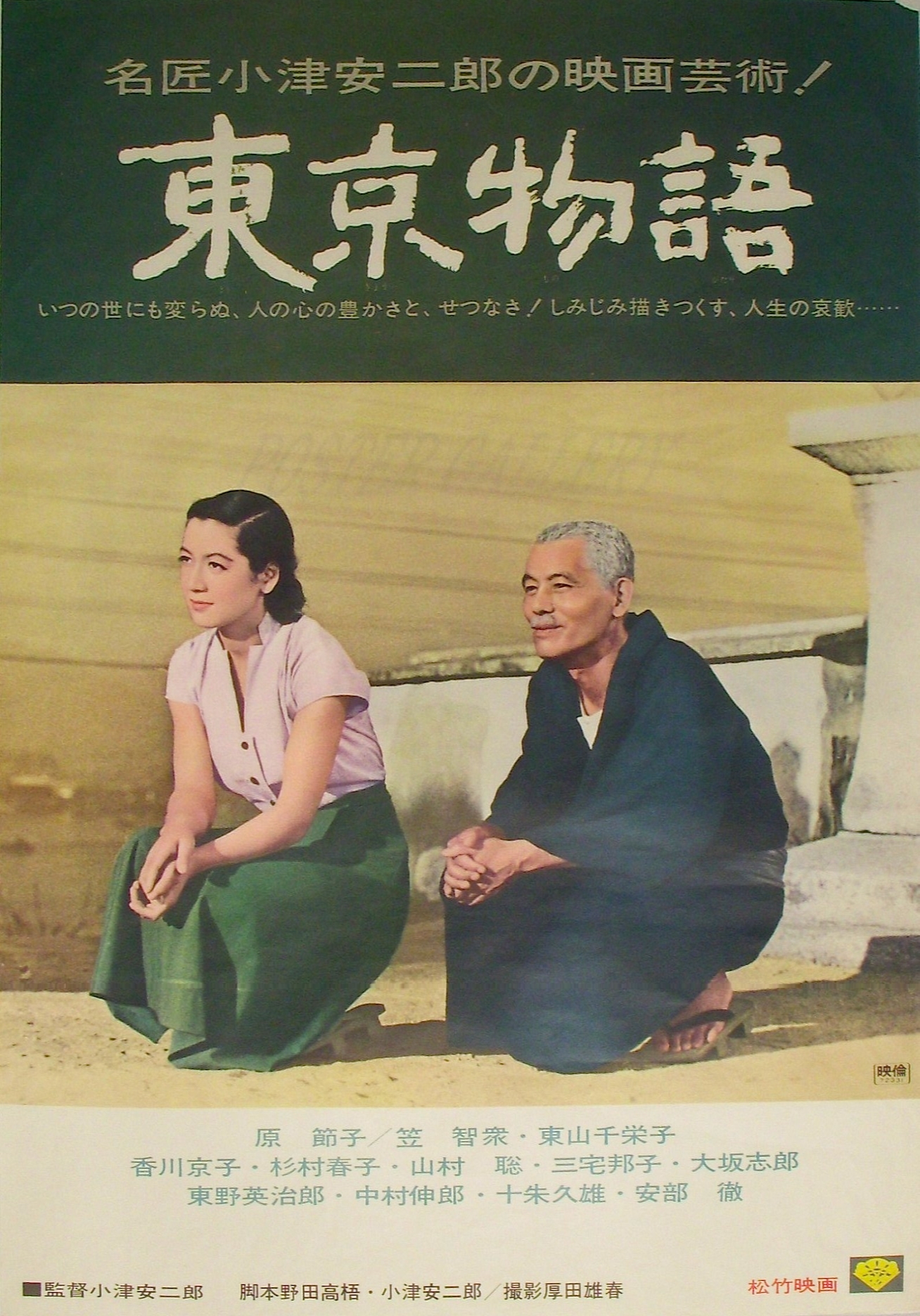
Yasujirô Ozu's Tokyo Story (1953) stands as a paramount example of post-war Japanese cinema, encapsulating the director's meticulous approach to storytelling and deep exploration of human relationships. Ozu, celebrated for his unique narrative style and compositional aesthetics, crafted a film that transcends cultural boundaries to offer insights into familial bonds and the inevitable passage of time. Positioned within Ozu's broader oeuvre, Tokyo Story reflects his continuous meditation on the impact of modernization on traditional family structures while showcasing his ability to address complex emotional landscapes with simplicity and grace.
The film centers on the visit of an elderly couple, Shukichi and Tomi Hirayama, to Tokyo to see their children. What unfolds is a profound examination of family dynamics, particularly the often unspoken tensions between parents and their adult children. Critics unanimously agree that the film’s exploration of aging and the resultant shifts in familial roles resonates universally, turning what could be a mundane narrative into a moving and resonant piece of art. The perfectly orchestrated scenes reveal a heartbreaking yet truthful reality, that the connections between generations can sometimes weaken amidst the fast-paced evolution of society.
Critics have lauded Ozu's ability to depict ordinary moments with extraordinary depth, achieving a mesmerically formal aesthetic that conveys the subtlety of everyday life. Through a series of seemingly simple yet profound interactions, Tokyo Story evokes a sense of nostalgia while highlighting the emotional distance that can develop within families. The film's exquisite framing and thoughtful pacing embody Ozu's characteristic style, immersing audiences in a world where human experiences are palpable and relatable. This portrayal renders the film not only beautiful in its execution but also significant in its thematic explorations.
What makes Tokyo Story endure as one of cinema's finest is its heartbreaking honesty in confronting the realities of parent-child relationships. Ozu paints a vivid picture of familial obligations clashing with individual pursuits, a theme that resonates deeply across generations and cultures. The performances by the cast, particularly Chishû Ryū and Chieko Higashiyama, imbue their characters with a genuine warmth that touches the hearts of viewers, transforming the film into an evocative reflection on love, loss, and the complexities of growing older.
Ultimately, Ozu's Tokyo Story remains a poignant reminder of the transient nature of life and the enduring significance of family. It captures the essence of what it means to be human, addressing the universal challenges posed by aging and changing familial relationships. As viewers reflect on the film long after the credits roll, they are left with a profound understanding of the need for connection, love, and comprehension across generations.