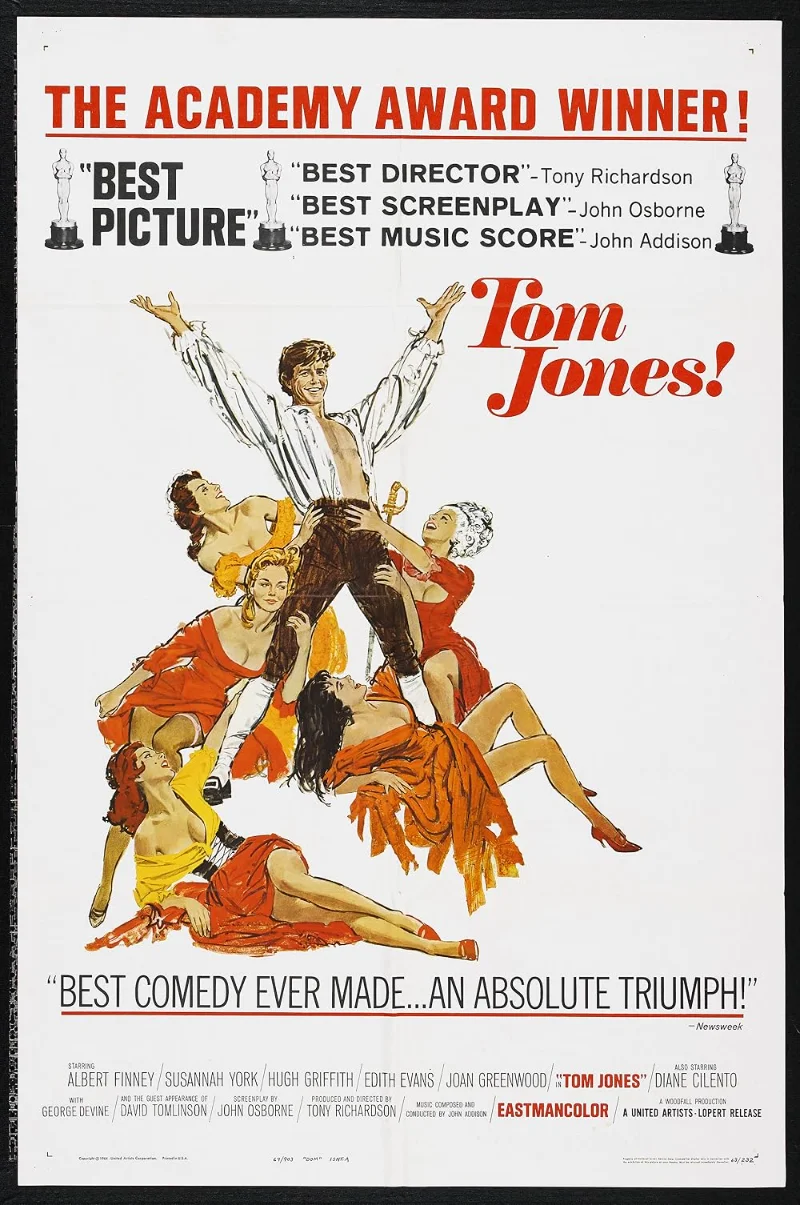
Released in 1963, Tom Jones, directed by Tony Richardson, stands as a significant landmark in cinema history, representative of the emerging British New Wave. This film, based on Henry Fielding’s 1749 novel, deftly captures a spirit that resonates with audiences even today, a testament to its enduring appeal and the cultural shifts of its time. Richardson’s direction injects the narrative with a free-wheeling energy, blending various cinematic techniques to craft a film that feels both contemporary and timeless, sharp in its observations on the human condition, and fiercely celebratory of sexuality.
At the heart of Tom Jones is its quintessential anti-hero, portrayed by Albert Finney, whose raucous exploits and womanizing tendencies become both the source of humor and moral reflection. Critics have lauded the film for its bawdy humor, a celebration of the licentiousness of its titular character as he navigates the complexities of love and social class in 18th-century England. The film effectively marries these themes with a rich sense of period drama, offering not only a narrative about romance and adventure but also a critique of societal norms that feel surprisingly resonant today.
Critical consensus regards Tom Jones as a rousing and fast-moving adaptation that succeeds in translating Fielding’s lively prose into a captivating visual experience. The film’s buoyant tone and characteristics are bolstered by a playful directorial style, which utilizes varied cinematography and rapid pacing to mirror the frenetic and often chaotic escapades of its protagonist. It is this very approach that earned Tom Jones several Academy Awards, solidifying its status as a classic within both the realms of literary adaptation and cinematic achievement, and drawing comparisons to other best-loved films of its era.
The reception of Tom Jones was overwhelmingly positive, marked by audience delight and critical acclaim alike. The film’s unabashed embrace of sexuality, combined with its humorous critique of gender roles and moral hypocrisy, invites viewers to reflect on both the past and the present. As a theatrical adaptation that resonates with the visual exuberance of its time, Tom Jones continues to be celebrated not only for its story but also for its technical prowess and charismatic performances, remaining a key reference point in discussions of cinematic adaptations of classic literature. Through this lens, Richardson’s film transcends mere cultural relic; it represents a vital exploration of timeless themes that intrigue and amuse, reminding us of the humanity at the core of its narrative.