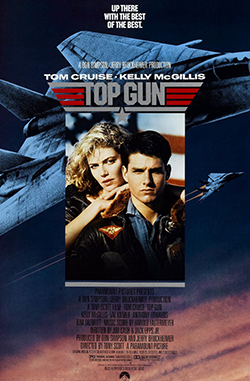
Released in 1986, Top Gun stands as a hallmark of 1980s cinema, emblematic of a decade that favored bold action, vibrant aesthetics, and a distinctive blend of romance and rivalry. Directed by Tony Scott, the film showcased his stylistic flair for visually dynamic storytelling, elevating the portrayal of military aviation to an almost operatic level. Top Gun not only contributed to the popularization of aerial combat films but also cemented Scott's reputation as a master of engaging, exciting cinema that often juxtaposed personal stakes with high-octane scenarios.
At its core, Top Gun explores themes of military training and personal rivalry through the lens of aviation. The film follows Pete "Maverick" Mitchell, a talented yet reckless fighter pilot whose ambitions are stoked by competition with his fellow pilots, particularly Iceman. This rivalry serves as a crucible for character development, challenging Maverick's notions of heroism and leadership. Critics have noted that while the plot may be predictable, it is precisely this structure that enables Scott to deliver exhilarating aerial sequences and fine-tuned character interactions. The choreography of the flight scenes remains a standout aspect, blending technical expertise with a visceral sense of drama and excitement.
The romantic subplot between Maverick and Charlotte "Charlie" Blackwood adds layers to the narrative, intertwining personal growth with professional ambition. This relationship, pivotal to the film’s emotional depth, mirrors Maverick's journey of self-discovery. Critics suggest that while the romance may follow a familiar formula, the chemistry between Tom Cruise and Kelly McGillis imbues it with authenticity. This dynamic, set against the backdrop of military commitment and the demands of competition, reflects the dual nature of ambition, both in love and in career aspirations.
The combination of military training, personal rivalry, and romantic involvement has contributed to Top Gun's longevity in popular culture. The film incites discussions on the nature of masculinity, valor, and the personal sacrifices made in the pursuit of excellence. Despite its frequent predictability, the carefully orchestrated tension and excitement resonate with audiences, inviting viewers into a world where the stakes are as high as the altitudes flown by the planes. Each scene is crafted to evoke a visceral reaction, making it a staple of the action genre.
In retrospect, Top Gun is not merely an action film but a cultural artifact that reflects the zeitgeist of its era and exemplifies Tony Scott's ability to infuse style with substance. Its impact on both cinema and popular culture is undeniable, prompting a blend of admiration and critique that continues to fuel discussions on its legacy. Tour de force aerial maneuvers, coupled with a compelling narrative about rivalry and romance, ensure that Top Gun will remain a critical touchstone for future generations, reminding audiences of the exhilarating yet complex interplay between personal ambition and collective duty.