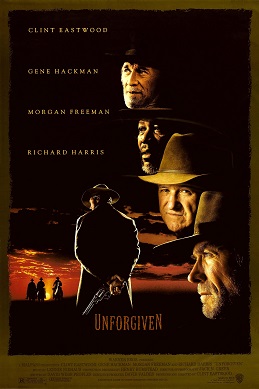
In the pantheon of Western cinema, few films resonate with the complexity and weight of Unforgiven, a 1992 masterpiece directed by Clint Eastwood. Often hailed as a capstone to the genre, Unforgiven serves both as a poignant reflection on the mythology of the American West and as a critique of the violence that has long characterized its narratives. As Eastwood, a giant of the Western genre, stepped behind the camera to direct, he simultaneously explored his own place within cinematic history, effectively redefining the heroic archetype. Instead of glorifying the gunfighter, he presents a stark and harrowing vision of morality, justice, and redemption, ultimately revealing the toll that violence exacts on the human spirit.
Critical consensus underscores the film’s gripping, elegant storytelling, with a nuanced approach to its themes of redemption and aging, set against the backdrop of a violent frontier. Eastwood’s character, William Munny, is an aging outlaw drawn back into a life of crime by the promise of justice for two abused women, and through Munny, Eastwood examines the complexities of morality and the notion of justice. The film reflects not just Munny’s personal reckoning, but also the broader societal implications of vengeance and the illusion of glory that accompanies the male-dominated narratives of the Old West.
In Unforgiven, violence is depicted not as a mere spectacle but as an act laden with moral consequence and existential weight. The film presents a thought-provoking meditation on the cyclical nature of revenge and the costs of living by the gun. With a masterful narrative structure and layered character development, Eastwood crafts a world where the lines between hero and villain blur, forcing the audience to confront uncomfortable truths about their own values and the legacies of aggression that perpetuate across generations. Every act of violence echoes, leaving scars that are often deeper than the physical wounds inflicted.
Aging is a significant theme in Unforgiven, as the protagonist grapples not only with his past but also with his diminishing strength and fading reputation. Herein lies an acknowledgment of mortality and the inevitable passage of time, leading to a profound sense of melancholy that permeates the narrative. The film’s magisterial quality lies in its refusal to present clear resolutions. Instead, it leaves viewers with lingering questions about justice, mercy, and the price of living in a world dictated by violence. Eastwood's artistry is evident in the immaculate cinematography and the haunting score, each element contributing to a powerful emotional experience.
In conclusion, Unforgiven stands as a landmark in both Eastwood’s career and Western cinema itself. Its great achievements lie not in the glorification of the outlaw, but in the exploration of the profound moral quandaries that accompany his actions. As audiences grapple with the film’s complex themes, they are invited to reflect on their own understanding of justice and redemption. In crafting this thought-provoking narrative, Eastwood ensures that Unforgiven will endure as a seminal work, one that resonates deeply with the ongoing discourse surrounding violence and moral responsibility.