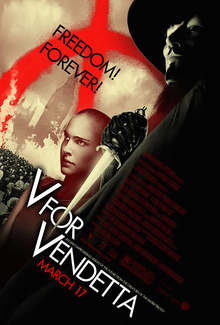
In 2005, directed by James McTeigue, V for Vendetta emerged as a visually striking adaptation of Alan Moore and David Lloyd's graphic novel. It stands at a crossroads in cinema history, embodying the era's socio-political anxieties as well as the zeitgeist of a post-9/11 world that grappled with issues of government surveillance, civil liberties, and the specter of totalitarianism. The film expands upon the ambitious themes present in the original graphic novel, rather than merely serving as a faithful retelling, offering a visually arresting spectacle that was both timely and politically charged.
Critically, V for Vendetta has received a mixed response. While some hail it as thematically ambitious and resonant, highlighting its exploration of revolution and individualism in the face of a dystopian landscape, others view it as uneven and sometimes shallow in its execution. The film's use of V, the enigmatic protagonist, serves as a symbol of rebellion against an oppressive regime, presenting a narrative that provokes thought yet occasionally strays into areas that feel more pompous than poignant. This dichotomy of reception reflects a broader tension between the film’s audacious aspirations and its perceived shortcomings in depth and cohesion.
The film’s visual aesthetics cannot be understated; its handsome design and striking imagery draw viewers into a meticulously crafted world where fear and oppression are palpable. The creators managed to blend action and philosophical inquiry, producing a film that captivates the eye while attempting to stimulate the mind. Yet, despite its visual allure, some critiques suggest a disorganization in storytelling that detracts from its thematic ambitions. The balance between spectacle and substance sometimes tilts unfavorably, leaving a sense of confusion rather than clarity.
In a burgeoning landscape of politically charged films post-2000, V for Vendetta finds itself in a compelling yet crowded genre. The film’s reflection on totalitarianism remains resonant today, positioning it as more than just a product of its time, but rather a cautionary tale relevant to ongoing conversations about power and freedom. However, it also walks the line of becoming a "big-budget monstrosity," raising questions about the fine line between blockbuster entertainment and meaningful commentary. The tension between revolutionary fervor and individual struggle, underscored by V’s iconic mask, continues to resonate with audiences searching for agency in a world often characterized by chaos.
Ultimately, V for Vendetta serves as a reminder of cinema's potential to challenge societal norms and provoke thought, even if its execution wades through uneven waters. As it sparks debate and contemplation regarding the nature of freedom, rebellion, and the individual’s role in society, it finds its place within the broader discourse on art and politics, echoing in relevance amid contemporary struggles for justice and autonomy.