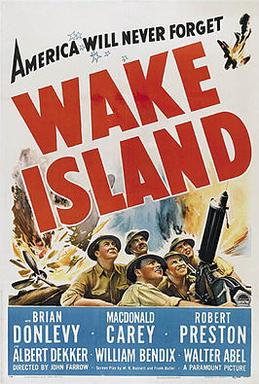
Wake Island, directed by John Farrow in 1942, occupies a significant place in the canon of World War II cinema, serving not only as a piece of entertainment but also as a potent form of wartime propaganda. Released shortly after the attack on Pearl Harbor, the film emerged at a time when the American public was rallying around the cause of the Allies and seeking encouragement from narratives that emphasized military valor and patriotism. Farrow, already a well-regarded director with an established career, crafted this film in a manner that echoed the collective sentiments of resilience and sacrifice that characterized the American psyche during this tumultuous period in history.
The film tells the story of the U.S. Marines stationed on Wake Island, facing overwhelming odds against Japanese forces. This narrative and its execution reflect the broader themes prevalent in wartime films of the era, such as military heroism and the valor of ordinary soldiers facing dire circumstances. Critics often highlight the film's depiction of camaraderie and sacrifice, presenting a group of diverse individuals united in the face of adversity, thereby elevating the discourse around American patriotism and the virtuous fight against tyranny. The heroism exhibited by the characters suggests an idealized reflection of American values during the war, where personal sacrifice is framed as a noble duty.
Critically, Wake Island has often been viewed through the dual lens of its historical accuracy and its role as propaganda. While some reviewers have pointed out the film's embellishments for dramatic purposes, particularly regarding the events leading to the island's downfall, there remains a consensus that its execution resonated with audiences seeking reassurance and inspiration from their military. The explicit glorification of the Marines' stand against the Japanese forces serves as a rallying cry, ensuring the film's continued relevance in discussions of American identity and military ethos. This aspect of the film underscores the concerns of its time: embedding a sense of purpose into the American effort in the Pacific theater.
Moreover, the cinematography and production values of Wake Island reflect the burgeoning technical achievements of early 1940s Hollywood, showcasing aerial combat sequences and military operations that captivated viewers while instilling a sense of pride. Farrow judiciously uses dramatic tension to underscore the unfolding tragedy of the battle and the sacrifices made. The engagement of the audience through visual spectacle was paramount in creating an emotional connection to the film's message.
In the landscape of cinema history, Wake Island also serves as an archetype for the war films that would follow, laying the groundwork for the narrative structures and thematic explorations that would become commonplace in the genre. The film stands as a historical artifact, illustrating not only the period's artistic tendencies but also the cultural milieu wherein cinema played a key role in shaping public perception of war. With the passage of time, while some of the film's elements may appear dated, its core themes of sacrifice and valor against insurmountable odds continue to resonate, redefining our understanding of military heroism.