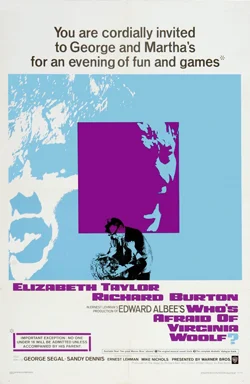
Released in 1966, Mike Nichols' Who's Afraid of Virginia Woolf? stands as a milestone in American cinema, marking a pivotal moment in both the director's career and the evolution of film narratives. Nichols transitioned from a successful stage career to filmmaking with this gripping adaptation of Edward Albee's play. The film's raw exploration of marital strife and psychological terrain resonated profoundly with audiences and critics alike. Nichols, known for his ability to elicit complex performances, proved to be a master of weaving unsettling yet compelling stories that challenge societal norms and confront uncomfortable truths about human relationships.
At its core, Who's Afraid of Virginia Woolf? delves into the tumultuous lives of George and Martha, a middle-aged couple who engage in a night of emotional warfare with younger guests Nick and Honey. This intense and disturbing portrayal of marital conflict lays bare the illusions that couples create to shield themselves from the harsh realities of their lives. The film masterfully oscillates between moments of dark humor and harrowing despair, depicting a relentless battle where emotional manipulation serves as both weapon and shield. Through this turbulent dynamic, the film interrogates the often blurry line between illusion and reality, compelling viewers to confront their own perceptions of love, fidelity, and self-deception.
Critically, the film has been heralded for both its audacious themes and the powerful performances of its cast, particularly Elizabeth Taylor and Richard Burton, whose portrayal of George and Martha is nothing short of mesmerizing. Taylor's performance in particular showcases her ability to embody the layered complexities of a woman grappling with her unfulfilled desires and palpable loneliness. Critics have praised the film for its unflinching portrayal of the darker aspects of human relationships, elevating it from mere drama to a poignant exploration of existential despair.
Who's Afraid of Virginia Woolf? challenges conventions with its intense dialogue and stark revelations, leaving an indelible mark on cinematic history. It captures a moment in time where the vulnerabilities of personal relationships were laid bare for public scrutiny. The film facilitates a broader discussion around the nature of truth in love and the facades people construct. In an era when traditional values were being questioned, Nichols' film resonated with audiences, serving as a reflection of cultural anxieties of the time while also retaining its relevance in contemporary discourse.
In conclusion, Nichols' Who's Afraid of Virginia Woolf? remains an essential study in the complexities of human relationships. Its exploration of marital conflict, the interplay of illusion and reality, and emotional manipulation provides a rich tapestry for analysis. With its compelling and disturbing narrative, the film evolves beyond the confines of its setting, encouraging viewers to examine their own lives and the often unseen battles that define them. As a cornerstone of Nichols' oeuvre, it cements his legacy as a filmmaker unafraid to confront the darkest corners of the human experience.