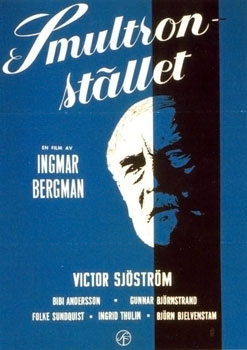
Ingmar Bergman's Wild Strawberries, released in 1957, stands as a testament to the director's unparalleled ability to explore the intricate landscapes of human emotions and memories. It emerged from a period in cinema characterized by a heightened introspection, marked by existential reflections in post-war Europe. Bergman, already a significant figure in the film industry prior to this work, solidified his status as a master storyteller who delves into the psyche of his characters with an unparalleled compassion and depth. The film not only serves as a pivotal entry in his oeuvre but also as a landmark moment in European cinema, highlighting the significance of personal narrative and the complexity of familial relationships amidst broader existential themes.
At the heart of Wild Strawberries lies an exploration of memory and regret, encapsulated in the journey of Professor Isak Borg, portrayed with haunting poignance by Viktor Sjöström. The film unfolds as a road trip, both literal and metaphorical, inviting audiences to accompany Isak on his path toward self-discovery. As he confronts the ghosts of his past, the narrative reveals a tapestry of disappointments and reflections that underscore the power and fragility of memory. Critics have highlighted how Bergman masterfully intertwines the melancholic and the lyrical, crafting moments that are both intimate and thought-provoking, ultimately leading Isak to grapple with existential questions regarding the meaning of life and the legacy one leaves behind.
The exploration of family dynamics in Wild Strawberries is equally significant, as Isak’s interactions with his past and present reveal not just a personal history but a familial legacy fraught with conflict and missed connections. The film paints a compassionate yet critical portrait of familial relationships, where love and disappointment coexist. This duality prompts a broader reflection on the human condition, a hallmark of Bergman's work that invites viewers to ponder their own lives through the lens of Isak’s journey. His introspective encounters prompt the audience to acknowledge their own memories and regrets, fostering a collective contemplation of what it means to connect with those we love and the implications of our choices.
Overall, Wild Strawberries resonates deeply due to its poetic and introspective qualities, offering a profound meditation on existence, memory, and the often haunting nature of self-reflection. The film's composition, a blend of surreal dream sequences and stark reality, coupled with its cinematographic brilliance, contributes to its status as a cinematic masterpiece. Critics laud its ability to elicit a resonant melancholy, leaving viewers with an enduring sense of reflection long after the credits roll, a testament to Bergman's extraordinary talents in bringing complex psychological themes to life. In essence, Wild Strawberries transcends the mere act of storytelling; it becomes a philosophical inquiry into the human experience, stirring questions of identity, purpose, and the inexorable passage of time.