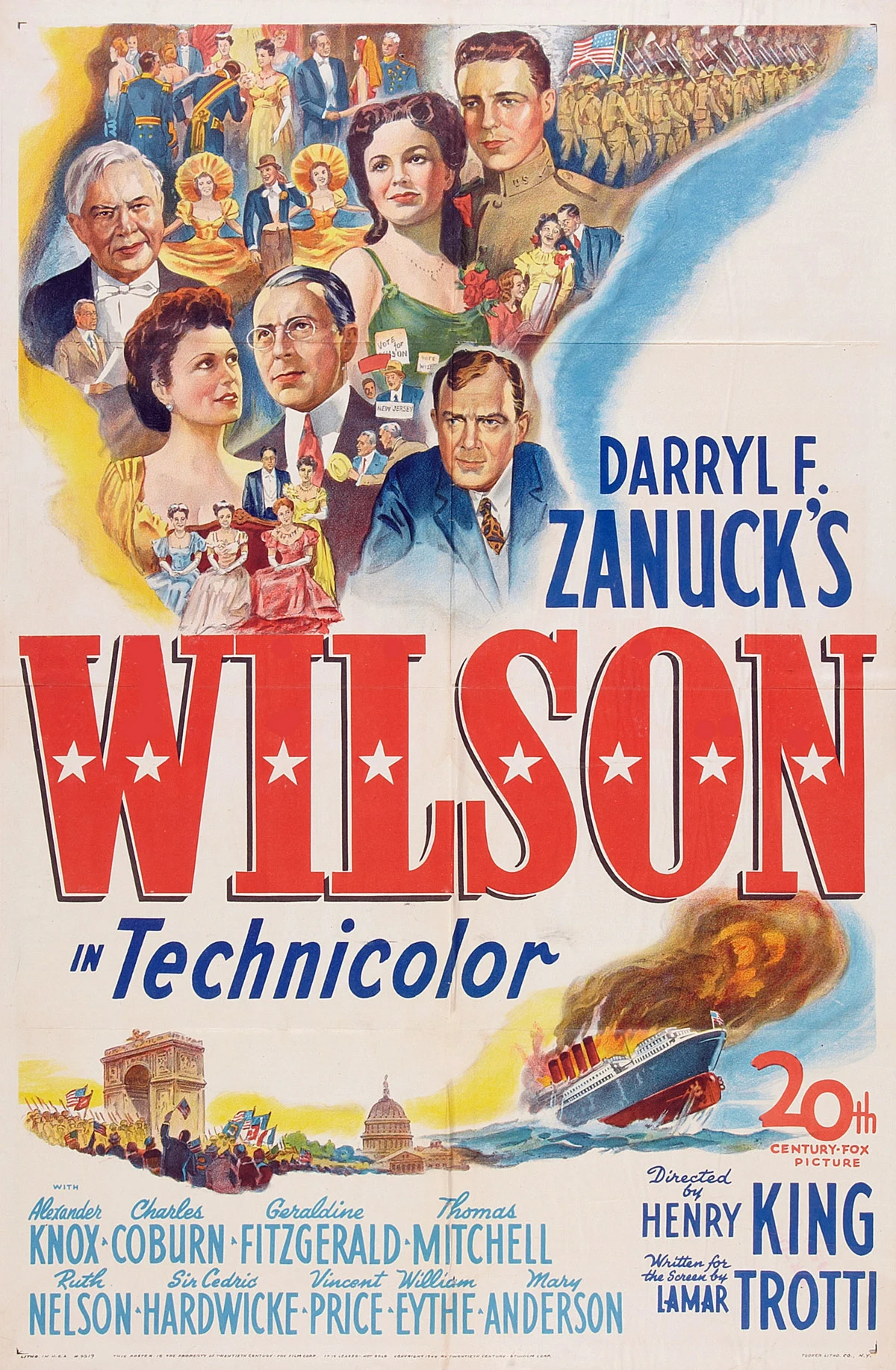
Directed by Henry King, Wilson (1944) stands as an ambitious political biography set against the backdrop of American history, focusing on the life and presidency of Woodrow Wilson. King's body of work, often characterized by lavish productions and strong narratives, finds a fitting expression in Wilson, which combines historical epic storytelling with presidential leadership themes. This film captures not just the man but the turbulent era he navigated, reflecting the complexities of a nation grappling with its identity amid world conflict. Released during World War II, Wilson offers viewers an insight into the ideals that defined American governance during a time of both introspection and global engagement.
Critical consensus surrounding Wilson has acknowledged its considerable merit, praising the film for its absorbing narrative and uniformly excellent performances. Reviewers have noted that the film is a masterly execution of biographical storytelling, pushing the boundaries of what a political drama can achieve. At its core, the film articulates themes of democracy, idealism, and resilience, capturing the essence of Wilson's moral and political dilemmas as he struggled to maintain American neutrality while advocating for global peace. Despite some critiques regarding its perceived excessiveness and uneven pacing at times, the film's grand vision remains commendable.
The film’s historical significance is bolstered by its portrayal of key moments in Wilson's presidency, such as his efforts in navigating the League of Nations, which would shape international relations for decades to come. King adeptly balances the drama of political maneuvering with Wilson's personal struggles, making the film both informative and compelling. The extensive cast delivers strong performances, helping to flesh out the complexities of the political landscape of the time, enhancing the epic scope of the narrative.
While some films of its era may have faltered in their representation of historical figures, Wilson strives to present a nuanced portrayal of its protagonist. The film suggests that true leadership involves a balance between personal conviction and the overwhelming tides of public opinion. This exploration of leadership deepens the viewer's appreciation for Wilson not just as a historic figure but as a man of conviction faced with the imperatives of his time. Ultimately, Wilson occupies a vital space in the canon of American historical cinema, offering a reflective examination of the interplay between personal values and political realities.