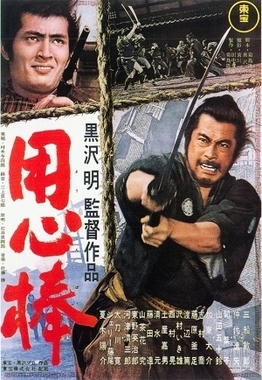
Yojimbo stands as a critical turning point in Akira Kurosawa's illustrious career and holds a prominent place in the annals of cinematic history. Released in 1961, this film marked a defining moment where traditional samurai cinema began to intersect with Western film tropes, a fusion that Kurosawa would masterfully exploit. The protagonist's archetype of the wandering samurai, reflective of both Eastern and Western influences, spotlights the evolving narrative landscape of post-war Japan, making Yojimbo not only a pivotal work in Kurosawa's filmography but also a cornerstone for the samurai genre itself, setting the stage for future interpretations across various cultures.
Critically, Yojimbo is often celebrated for its exploration of moral ambiguity, presenting characters that operate within a spectrum of right and wrong rather than adhering to clear-cut distinctions. This complexity is compounded by a cynical view of human nature and societal structures, pushing against romanticized notions of honor typical of earlier samurai films. The film's protagonist, played with a mix of charm and pragmatism, embodies an amoral perspective, using cunning rather than swordsmanship to navigate a conflict between rival gangs. This evolution towards a more nuanced portrayal of justice contrasts with traditional heroism, adding layers to the narrative and allowing for moments of humor amidst violence, a blend that captivates audiences and keeps them engaged.
The impact of Yojimbo on Western cinema cannot be overstated. Its influence is notably seen in the Spaghetti Westerns of the 1960s, particularly in films by directors such as Sergio Leone, who adopted its structure and thematic elements. The interplay of action, humor, and criticism of capitalism resonates throughout the Western genre, showcasing how Yojimbo transcended cultural boundaries to redefine not only the samurai film but also the storytelling possibilities within the Western canon. Kurosawa's stylistic innovation, particularly in framing and pacing, infuses Yojimbo with a dynamic visual quality, rewarding viewers with exhilarating action sequences that do not simply exist for spectacle but serve the film's deeper narrative threads.
In addition to its stylistic achievements, Yojimbo serves as a profound commentary on the nature of violence and the human condition, encapsulating a darkly humorous take on the futility of conflict. The film draws a stark contrast between the absurdity of gang warfare and the protagonist's calm detachment, evoking a sense of amusement while simultaneously prompting reflections on the consequences of greed and power struggles. Through this lens, Kurosawa presents a world where honor is a vestige of the past, replaced by the self-serving whims of individuals, thus echoing the director's preoccupation with societal issues relevant both to his time and universal human experiences.
In conclusion, Yojimbo remains a vital entry in world cinema and a testament to Akira Kurosawa's innovative storytelling prowess. Its blend of cynicism and humor, combined with a subversion of genre conventions, places it firmly in the hearts of both Eastern and Western audiences, influencing filmmakers and storytellers across generations. As viewers continue to engage with its themes and stylistic choices, Yojimbo endures as a masterclass in cinematic adaptability, showcasing how a single film can resonate across cultures while provoking contemplation on the complexities and contradictions inherent in the human experience.