Career Overview
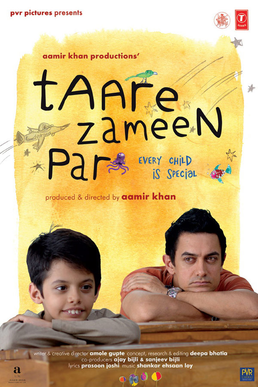
Aamir Khan occupies a singular position in contemporary cinema, seamlessly transitioning from a celebrated on-screen presence to an auteur of profound social consequence. His directorial footprint in the current database centers on his debut feature, Like Stars on Earth, a work that redefined the parameters of the modern family drama. Rather than relying solely on the conventions of commercial entertainment, Khan utilized his immense cultural capital to craft narratives centered on human vulnerability and systemic critique.
The chronological significance of his transition to directing in 2007 cannot be overstated. At a time when global cinema was increasingly polarized between massive blockbuster spectacles and niche independent films, Khan forged a middle path. He integrated the expansive, glamorous presentation typical of major film industry trends with the intimate, psychological rigor expected of arthouse cinema. This approach allowed him to address complex social issues without alienating a broader audience.
Khan's position in cinema history is defined by this synthesis of accessibility and pedagogical intent. Critics have noted how his work bridges celebrity culture commentary with heartfelt emotional depth, placing him in a lineage of directors who view the camera as a tool for empathy. His ability to navigate the intersections of American cinema contexts, Cannes Film Festival prestige, and indigenous storytelling traditions marks him as a truly transnational filmmaker.
Thematic Preoccupations
The central thematic preoccupation of Khan's directorial work is a rigorous exploration of childhood trauma and the systemic failures of the education system. In Like Stars on Earth, he dissects how institutional rigidity actively stifles artistic expression. The narrative frames cognitive differences not as behavioral deficits but as alternative, valid modes of processing the world. This critique of pedagogical conformity reveals a deep philosophical concern with how society measures human worth.
A secondary but equally vital theme is the complexity of parent and child relationships. Khan investigates the domestic space as a site of both immense pressure and profound emotional rescue. The recurring motif of overcoming adversity is inextricably linked to compassionate mentorship, suggesting that healing occurs only when authority figures abandon punitive measures in favor of radical empathy. His protagonists often navigate a world that demands conformity, making the eventual triumph of the individual a deeply celebratory narrative.
Beyond the immediate interpersonal dynamics, Khan engages with broader cultural commentaries. His films subtly critique celebrity culture and the very film industry trends that elevated him to stardom. By wrapping sensitive storytelling within a glamorous presentation, he subverts audience expectations. He uses the star-studded cast and the visual language of high-end global cinema as a Trojan horse, delivering subversive messages about societal neglect and the transformative power of art.
Stylistic Signatures
Khan's directorial approach is defined by what critics consistently describe as visually arresting imagery. He excels at externalizing the internal, often chaotic, psychological states of his protagonists. In Like Stars on Earth, the subjective reality of a struggling child is rendered through imaginative, vibrant animation and subjective camera angles. These expressive sequences contrast sharply with the drab, oppressive geometry of the boarding school, creating a visual dichotomy between freedom and confinement.
The mise en scene in Khan's work carefully balances the spectacular with the intimate. He frequently shifts from claustrophobic, dimly lit classrooms to expansive, sunlit spaces of artistic creation. His color palettes evolve alongside the protagonist's journey, moving from muted, oppressive tones to an explosion of primary colors that signify emotional liberation. This aesthetic precision is matched by an assured direction that avoids the melodramatic pitfalls common to issue-driven cinema, favoring instead a grounded, naturalistic rhythm.
Sound and editing further reinforce his sensitive storytelling. The rhythm of his films relies on a careful modulation between energetic, celebratory sequences and moments of quiet, heartfelt emotional depth. Strong performances are central to his stylistic signature, and his camera frequently employs lingering close-ups to capture the subtle nuances of childhood vulnerability. This technique forces the audience into an empathetic alignment with the protagonist, making the eventual overcoming of adversity a shared, visceral experience.
Recurring Collaborators
Although the current database highlights a singular directorial effort with no recurring cast members explicitly identified across multiple films, Khan's collaborative ethos is a fundamental aspect of his filmmaking identity. His methodology relies heavily on integrating a star-studded cast with relatively unknown or inexperienced actors. This dynamic interplay creates a unique on-screen friction, grounding the inherent glamour of established cinematic icons with unvarnished, authentic talent.
In Like Stars on Earth, the partnership between the director and his young lead protagonist stands as the defining collaboration of the work. Khan's ability to elicit a remarkably strong performance from a child actor demonstrates a directorial method rooted in patience, mutual trust, and psychological safety. This central dynamic anchors the entire production, proving that his most vital collaborations occur in the intimate space between director and performer.
Furthermore, Khan's interaction with the broader cinematic apparatus reveals a strategic collaboration with global film industry structures. By aligning his projects with high-profile global cinema networks, and evoking the prestige of international showcases like the Cannes Film Festival, he amplifies the reach of his intimate dramas. His collaborations thus extend beyond individual crew members to encompass a strategic dialogue with the global film market, utilizing prestigious film accolades to champion marginalized narratives.
Critical Standing
Aamir Khan's critical standing as a director is characterized by widespread acclaim for his sensitive and assured direction. Prominent critics from publications such as Slant Magazine, The A.V. Club, and The New York Times have consistently praised Like Stars on Earth as a heartfelt and visually arresting drama. This critical consensus underscores his successful evolution from a mainstream commercial actor to a highly respected cinematic auteur capable of handling delicate subject matter.
His work occupies a unique and revered place within critical discourse, straddling the line between populist entertainment and rigorous social critique. The frequent comparisons to Taare Zameen Par in contemporary discussions of educational narratives highlight the enduring cultural milestone his film achieved. Critics frequently cite his debut as a definitive text on childhood trauma and systemic educational reform, cementing its status as a touchstone in modern global cinema.
Over time, Khan's reputation has evolved to reflect his influence on both domestic and international stages. Mentions of prestigious film accolades and American cinema contexts within reviews of his work indicate a critical readiness to elevate his narratives to the highest echelons of cinematic achievement. He is celebrated not just for his inherent star power, but for leveraging that visibility to foster a cinematic environment where glamorous presentation and deeply humanistic, empathetic storytelling perfectly coexist.