Career Overview
Baz Luhrmann occupies a highly specific and often polarizing position in the history of contemporary cinema. Coming from a background steeped in theater and opera, he brings an unapologetically grandiose sensibility to the silver screen. His career trajectory reflects a continuous escalation of scale, culminating in projects that redefine genre boundaries for modern audiences. He is widely recognized as an auteur who bridges classic cinematic spectacles with aggressive modern sensibilities.
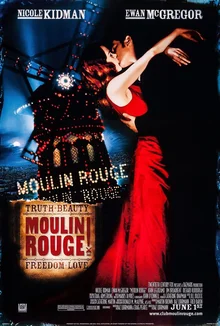
The release of Moulin Rouge! cemented his reputation as a filmmaker capable of breathing new life into dormant genres. By synthesizing the visual language of classic Hollywood musicals with the frenetic pacing of the MTV generation, he established a cinematic universe entirely his own. Critics frequently measure his subsequent output against his previous films, noting how his artistic ambition and innovation have consistently driven his career forward.
Today, Luhrmann stands as a singular visionary within critical discourse. He reinvigorated the cinematic musical for the twenty-first century, proving that audiences were still hungry for heightened theatricality. His work demonstrates that a deep reverence for cinematic history can comfortably coexist with the heavy influence of modern pop culture, securing his legacy as a director of unparalleled boldness.
Thematic Preoccupations
Central to the cinematic worldview of Baz Luhrmann is an unyielding obsession with romantic themes of love, which are almost universally intertwined with the inevitability of profound sacrifice. In Moulin Rouge!, the romance between a penniless poet and a cabaret star is fraught with systemic and personal obstacles. Luhrmann frames love not merely as a convenient narrative device, but as a transcendent, fatalistic force that demands everything from those who pursue it.
Equally important to his filmography is the recurring theme of artistic ambition and innovation. Luhrmann frequently pits the Bohemian ideals of truth, beauty, freedom, and love against the oppressive, transactional forces of jealousy and commerce. This ideological conflict is personified in the struggles of his protagonists, who must often navigate a world that seeks to commodify their art and their passions. The tension between pure artistic expression and the demands of reality mirrors Luhrmann's own grand cinematic project.
Furthermore, his films constantly explore the collision between the past and the present. By actively blending classic Hollywood musical elements with the aggressive influence of modern pop culture, Luhrmann interrogates how historical archetypes translate to contemporary audiences. He repeatedly asks how classic tragedies can be made urgently relevant today, using anachronism as a tool to bridge the emotional gap between his characters and the modern viewer.
Stylistic Signatures
Luhrmann is practically synonymous with a vibrant and energetic atmosphere. His visual language is frequently described by critics as a riot of color and movement. He employs hyperkinetic editing techniques, deeply saturated color palettes, and restless camera movements to create an immersive, maximalist experience. This dazzling, delirious aesthetic is designed to overwhelm the senses, plunging the audience directly into the emotional chaos experienced by his characters.
His approach to mise-en-scene embraces complete artificiality and kaleidoscopic theatricality over gritty realism. The 1890s Paris depicted in Moulin Rouge! is not a historically accurate recreation, but rather a fever dream constructed on soundstages. This distinct style allows him to manipulate space and lighting to reflect the internal psychological states of his protagonists, turning every physical environment into an extension of their intense romantic yearnings.
Musically, Luhrmann is celebrated for his innovative use of contemporary music. Instead of relying strictly on period-accurate scores or entirely original compositions, he embeds modern pop culture anthems into historical and theatrical settings. This signature auditory approach provides an immediate emotional shorthand, translating the timeless romantic themes of love and sacrifice into a musical vernacular that is instantly recognizable to a modern audience.
Recurring Collaborators
While our database does not identify recurring cast members across multiple films, Luhrmann's distinct style demands a highly specific type of performer. His actors must be completely committed to a heightened, often melodramatic reality, balancing deeply emotional romantic themes with extreme theatricality. Performers in a Luhrmann film are required to abandon naturalism, acting instead as hyper-expressive avatars for his outsized artistic ambition and innovation.
The creation of his vibrant and energetic atmospheres also implies intensely synchronized collaborations with his behind-the-camera crew. To execute a riotous, kaleidoscopic musical like Moulin Rouge!, the synergy between the director, production designers, and cinematographers must be absolute. The visual riot of color and movement is not achieved by chance, but through meticulous, unified planning by a dedicated creative team operating at the height of their craft.
Additionally, the musical demands of his filmography require extraordinary collaboration with musical directors and choreographers. The seamless integration of contemporary music into the rigid structures of classic Hollywood musicals requires an extraordinarily cohesive creative unit. These technical partnerships are the invisible foundation that allows Luhrmann to maintain his infectious energy and visually stunning execution on screen.
Critical Standing
Luhrmann's critical reputation is largely defined by his maximalist tendencies and his unwavering commitment to his distinct style. Critics across major publications, from IndieWire to The Guardian, have frequently praised Moulin Rouge! as a dazzling, delirious, and deliriously entertaining musical. Reviewers consistently highlight his infectious energy and his ability to craft visually stunning, emotionally resonant narratives that push the boundaries of traditional filmmaking.
However, his place within critical discourse is not without debate. While many applaud his artistic ambition and innovation, his riotous, kaleidoscopic aesthetic can sometimes polarize purists who prefer subtle restraint over relentless sensory stimulation. Critics often compare his new releases to classic Hollywood musicals and to his own previous films, attempting to parse whether his heavy reliance on modern pop culture enriches or distracts from the core narrative.
Despite these debates, his standing has solidified over time. As the initial shock of his frenetic pacing fades, critics have come to recognize the deep emotional resonance beneath the riot of color and movement. Today, Luhrmann is firmly established in the critical canon as a visionary who successfully married artistic ambition with massive pop cultural influence, ultimately reviving the movie musical for a new generation of cinephiles.