Career Overview
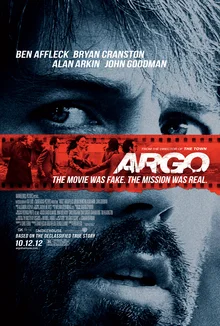
Ben Affleck transitioned from a celebrated acting career to a formidable force behind the camera, marking a significant evolution in contemporary American cinema. His directorial identity is heavily anchored in the tradition of classical Hollywood storytelling, reviving the robust, adult-oriented thrillers of the 1970s. By balancing mainstream accessibility with rigorous historical frameworks, Affleck has carved out a unique space as a craftsman of the political thriller. His crowning achievement in our database, Argo, exemplifies this maturation. The film operates as a historical dramatization that successfully bridges the gap between commercial entertainment and geopolitical inquiry. By stepping into both the lead acting role and the director's chair, Affleck demonstrated a firm command of complex narrative logistics, moving beyond mere star vehicle vanity projects into serious auteur territory. Affleck represents a specific lineage of American filmmaking that prizes narrative efficiency and structural integrity over radical experimentation. His position in cinema history can be viewed as a custodian of the intelligent studio picture. Critics often align his sensibilities with the golden era of paranoid thrillers, suggesting that his directorial voice is defined by a deep reverence for the craft of classical Hollywood suspense.
Thematic Preoccupations
A central preoccupation of Affleck's work is the intersection of political reality and theatrical artifice. He is fascinated by the mechanisms of deception, particularly how institutional power structures, such as CIA operations, utilize the tools of storytelling to manipulate historical outcomes. This duality allows him to explore the moral ambiguities of espionage alongside the inherent absurdity of Hollywood involvement. The historical event itself, specifically the 1979 to 1981 Iranian hostage crisis, serves as a canvas for broader philosophical concerns regarding American foreign policy. Affleck attempts to map the complex geopolitical landscape, outlining early interventions like the deposition of Mohammed Mossadegh, before narrowing the focus to an intimately scaled rescue mission. This macro to micro structural approach allows him to interrogate the legacy of American interventionism, even as the narrative propulsion focuses on individual survival. Furthermore, the tension between responsibility and entertainment frequently bubbles to the surface of his thematic explorations. The juxtaposition of nail-biting suspense with whimsical humor creates a tonal friction that highlights the surreal nature of covert operations. By comparing the rescue mission to narratives akin to The Great Escape or The Producers, Affleck asks the audience to consider how historical trauma is processed and ultimately repackaged as myth.
Stylistic Signatures
Affleck's visual language leans heavily into meticulous period reconstruction and a gritty, textured cinematic realism. The aesthetic is carefully calibrated to evoke the cinematic language of the late 1970s. This approach relies on a muted color palette, dynamic camera movements, and a production design that prioritizes authentic clutter over stylized gloss. He aims for a documentary-style immediacy that grounds the sensational narrative elements in a tactile, recognizable reality. Rhythm and pacing are paramount to his stylistic signature, defined by an exquisite timing that ratchets up the tension with mathematical precision. The editing structures are designed to cross-cut between disparate locations, seamlessly weaving the high-stakes bureaucracy of intelligence agencies with the claustrophobic dread experienced by the hiding diplomats. This cross-cutting technique builds a spellbinding narrative momentum, resulting in what critics describe as an engaging plot driven by dramatic storytelling. Tonally, Affleck achieves a remarkably difficult balancing act by integrating surprisingly funny moments into an otherwise grave historical dramatization. This is often achieved through dialogue rhythm and deadpan performances rather than overt comedic staging. The use of sound and score functions traditionally, swelling to amplify rousing performances and underscore the tension, aligning closely with the conventions of classical Hollywood craftsmanship.
Recurring Collaborators
While our database highlights a specific phase of his career, the collaborative framework of Affleck's directorial efforts relies heavily on precise creative partnerships behind the camera. A crucial element of his success stems from his reliance on rigorous screenwriting. His collaboration with screenwriter Chris Terrio proved essential in wrestling a sprawling historical incident into a streamlined, propulsive cinematic narrative. Terrio's ability to balance wide geopolitical understanding with sharp, character-driven dialogue perfectly complements Affleck's directorial sensibilities. In terms of on-screen talent, Affleck frequently casts himself as the stoic center of his own narratives, serving as both the audience surrogate and the quiet moral anchor. This dual role of director and lead actor requires a distinct level of trust with his ensemble cast. He surrounds himself with a deep bench of character actors who can deliver rousing performances without tipping into melodrama. The structural integrity of his films also points to a reliance on meticulous below-the-line artisans, particularly in editing and production design. To achieve the seamless blend of political thriller and Hollywood satire, Affleck requires editors who possess a mastery of cinematic pacing, ensuring that the tonal shifts between whimsical humor and dramatic storytelling feel organic rather than jarring.
Critical Standing
Affleck's critical reputation as a director has undergone a remarkable trajectory, culminating in his recognition as a premier craftsman of the contemporary American thriller. Critics often praise his work for reviving the spirit of 1970s cinema, frequently drawing favorable narrative comparisons to canonical political thrillers like All the President's Men, Three Days of the Condor, and The Parallax View. This lineage places Affleck squarely within a critical discourse that values intelligent, entertaining experiences that crackle with energy and purpose. However, his standing is not without rigorous critical debate. While many reviewers celebrate his films as undeniably rousing and spellbinding, others interrogate the political undertones of his historical dramatizations. Some critics point to deeply irresponsible themes, arguing that the pursuit of nail-biting suspense occasionally comes at the expense of geopolitical nuance. This tension between historical fidelity and Hollywood entertainment remains a focal point of critical analysis surrounding his filmography. Ultimately, Affleck occupies a respected position among contemporary auteurs as a director capable of executing amazing real-life capers with both gravitas and surprising humor. His ability to marshal complex narratives, balancing the absurdity of the entertainment industry with the grave stakes of international espionage, has solidified his status. The critical consensus suggests that his directorial voice, while rooted in classical homage, possesses a distinct and engaging vitality that continues to command serious analytical attention.