Career Overview
Benh Zeitlin occupies a highly specific and mythic space within twenty-first-century American independent cinema. Arriving on the scene with an explosive, fully formed directorial vision, he immediately established himself as a filmmaker dedicated to grassroots storytelling and regional folklore. His career arc is inexorably tied to the massive cultural footprint of his debut, a project that challenged the conventions of low-budget filmmaking by infusing it with epic scale and apocalyptic stakes.
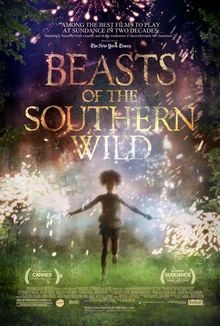
His position in contemporary film history was cemented by the release of Beasts of the Southern Wild, which critics rightfully heralded as a remarkably skilled first feature. Zeitlin did not merely direct a movie. He orchestrated a sprawling, communal artistic endeavor that blurred the lines between regional theater, magical realism, and urgent environmental activism. This approach positioned him as an auteur of the margins, a director who looks toward forgotten geographies and neglected populations to mine deep veins of human resilience.
While his filmography is not as voluminous as some of his contemporaries, his singular aesthetic has cast a long shadow over independent filmmaking. By championing a model of production that relies on authentic, deeply embedded community collaboration rather than traditional studio hierarchies, Zeitlin carved out a niche as a cinematic folklorist. He constructs immersive, lived-in worlds that feel both radically contemporary and as ancient as the soil on which they are filmed.
Thematic Preoccupations
The overarching philosophical concern in the cinema of Benh Zeitlin is the sheer, raw will required for survival. This survival theme is never strictly individualistic. It is intrinsically tied to a deep community focus, examining how groups of outcasts, eccentrics, and marginalized figures band together in the face of insurmountable odds. The characters populating his frames are often caught in a struggle against both literal and metaphorical storms, forcing a contemplation of what it means to be resilient when the modern world attempts to wash your home away.
Climate change commentary operates as a foundational bedrock for his narrative architecture. In Beasts of the Southern Wild, ecological collapse is not presented through the sterile language of scientific charts or distant news reports. Instead, it is experienced viscerally by a self-reliant community living on the edge of the world. The encroaching waters and dying ecosystems are interpreted through a childlike, mythic lens, turning environmental catastrophe into an urgent, apocalyptic fable that demands an immediate, soulful reckoning.
Furthermore, Zeitlin constantly returns to the intersection of familial decay and natural decay. The declining health of a father figure mirrors the physical erosion of the surrounding bayou, entwining human mortality with environmental vulnerability. Yet, despite these grim realities, his thematic worldview remains fiercely defiant. His films are a testament to the soulful character development of people who refuse to be displaced, celebrating an unyielding human spirit that responds to tragedy with chaotic, joyous resistance.
Stylistic Signatures
Zeitlin employs a highly kinetic, visceral visual language that relies heavily on energetic pacing and tactile imagery. His camera is rarely static, opting instead for a restless, roaming quality that thrusts the audience directly into the mud, water, and debris of his chosen environments. This handheld aesthetic creates an immersive, documentary-like authenticity, yet it is constantly elevated by imaginative visuals that push the boundaries of literal reality into the realm of folklore and magical realism.
Critics frequently note the poetic narrative structure of his work, which draws significant comparisons to the lyrical, awe-inspiring reveries found in Terrence Malick's The Tree of Life. Zeitlin shares Malick's fascination with the cosmic implications of the natural world, but he grounds this philosophy in the muck and grit of the American South. The resulting style is a unique brand of Apocalyptic Southern Gothic, where prehistoric beasts and raging storms are visualized with an ambitious, feverish intensity that rivals the chaotic river journey of Apocalypse Now.
At the same time, the intimate scale of his character work recalls the unflinching, authentic storytelling seen in Andrea Arnold's Fish Tank. Zeitlin grounds his grandiose, mythological ambitions in a deeply subjective viewpoint, usually anchored by a fierce, youthful protagonist. The editing rhythms mirror the heartbeat of this young perspective, resulting in a film that feels flawed yet heartfelt. The soundscape and musical score, often composed by Zeitlin himself, further amplify this emotional resonance, fusing brass bands and folk instrumentation into a triumphant, soulful roar that defines his cinematic signature.
Recurring Collaborators
Although traditional casting databases may not identify a wide roster of recurring professional actors across multiple features, the collaborative spirit of Benh Zeitlin relies fundamentally on non-traditional partnerships. His primary allegiance is to the community rather than the Hollywood establishment. Zeitlin prefers to cast local residents and non-professional actors, utilizing their lived experiences to anchor his narratives in undeniable truth. This method transcends standard directing, turning the filmmaking process into a localized, collective artistic happening.
The most critical acting partnership in his early career was undeniably with Quvenzhane Wallis. Cast as a young child with no prior acting experience, her performance in Beasts of the Southern Wild was universally hailed by critics. Reviewers described her character as a force of nature named Hushpuppy, and her ability to carry the emotional weight of an ambitious film was central to its success. Zeitlin's skill in guiding such a raw, untutored talent speaks to his broader directorial philosophy of nurturing authentic storytelling over polished theatrical technique.
Beyond the actors in front of the camera, Zeitlin relies heavily on grassroots creative collectives behind the scenes. Operating with a tightly knit crew of artisans, production designers, and fellow filmmakers, he builds elaborate, tactile sets out of salvaged materials and local junk. This communal approach to production design and world-building ensures that every frame feels organically constructed by the very people who inhabit it. The result is a vibrant, chaotic aesthetic that could never be replicated on a traditional studio soundstage.
Critical Standing
The critical reputation of Benh Zeitlin was solidified almost instantaneously upon his debut, marking a rare instance where a completely unknown filmmaker captured the zeitgeist of international cinema. Beasts of the Southern Wild premiered to rapturous applause, earning profound Sundance Film Festival influence before crossing the Atlantic to secure massive Cannes Film Festival recognition. Critics were quick to praise the picture as a fusion of fable and soulful reality, identifying Zeitlin as a bold new voice capable of marrying urgent social critique with boundless cinematic imagination.
Within critical discourse, Zeitlin is frequently positioned as a bridge between disparate filmmaking traditions. Reviewers enthusiastically draw comparisons between his work and monumental cinematic achievements, noting the feverish, surreal descent of Apocalypse Now alongside the cosmic, elemental grace of Terrence Malick's The Tree of Life. Yet, despite these lofty comparisons, critics also appreciate the gritty, grounded realism of his environments, aligning him with the social realism of European auteurs like Andrea Arnold. This ability to synthesize the mythic with the marginal has earned him immense respect from film scholars and critics alike.
While his work has occasionally been described as flawed yet heartfelt, these critiques are generally overshadowed by an appreciation for his sheer ambition. Even when his narratives threaten to buckle under the weight of their own poetic aspirations, reviewers remain enamored with his energetic pacing and emotional sincerity. Today, Zeitlin occupies a unique pedestal in modern independent film history, celebrated as a visionary director who reimagined the possibilities of self-reliant filmmaking and introduced a completely original, fiercely authentic idiom to the American cinematic landscape.